
China Top 10 LED Strip Fixture Manufacturers
China’s LED industry includes companies serving residential, commercial, architectural, and industrial projects. This guide introduces ten Chinese manufacturers of Led Strip Fixtures, with attention to product range, customization, and practical sourcing considerations. The goal is not to declare one universal winner. A suitable supplier depends on the space, installation method, and project budget.
Buyers often compare fixture profiles, diffuser materials, finish options, and compatibility with LED strips and drivers. They also need clear information about dimensions, heat management, photometric data, and quality checks. Ask for current product specifications and sample photographs before making decisions. Small details matter. Fit matters. A narrow aluminum channel, for example, may fit a cabinet edge but offer too little room for wiring or heat dissipation. Confirm installation conditions with a qualified lighting professional when requirements are unclear.
The manufacturers in this overview should be assessed using verifiable information, including published catalogs, factory capabilities, certifications relevant to the destination market, and documented customer support. These factors can change over time, and online descriptions may omit important limitations. Treat rankings as a starting point, not a guarantee. No list is flawless. Some suppliers may excel at custom profiles, while others may suit standardized orders better. Compare quotations on equal specifications, request samples where practical, and confirm lead times, warranty terms, and packaging details in writing. A careful review can reduce surprises, though it cannot remove every project risk.
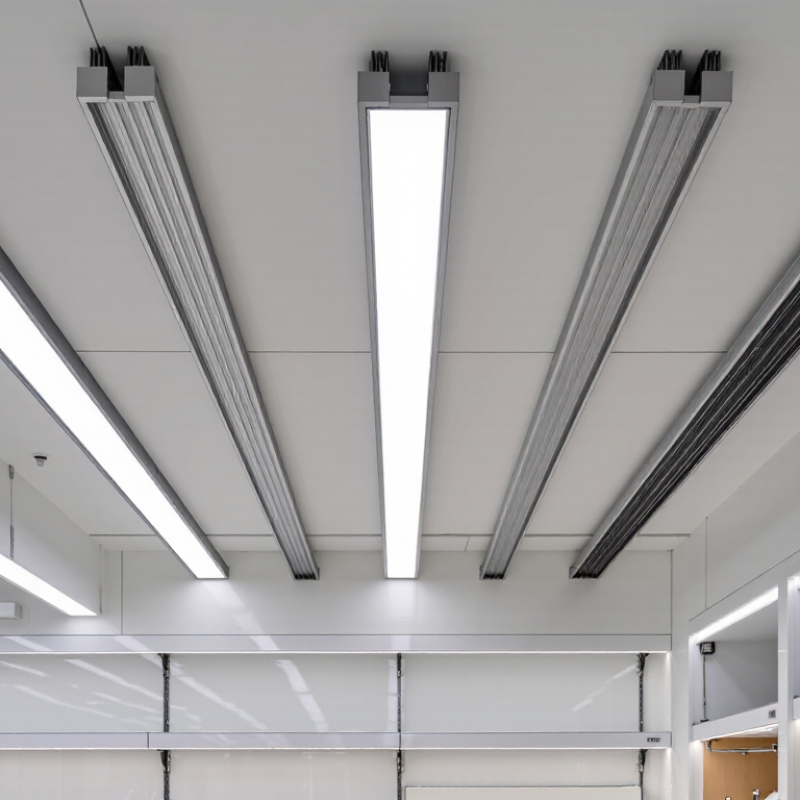
LED Strip Fixture Basics: 12 V/24 V, CCT, CRI, and Luminous Efficacy
For LED strip fixtures, 12 V and 24 V describe the supply voltage, not brightness. At equal wattage, a 24 V run draws about half the current, often reducing voltage drop along the same cable. Yet long runs can still dim at the far end. For a five-metre installation, check the manufacturer’s maximum run length and consider feeding power at both ends. Small detail, big difference.
Choose CCT for the room: 2700–3000 K feels warm, while 4000 K appears more neutral. CRI describes color rendering, but the average score can hide weak saturated reds; check R9 when lighting food, wood, or skin. The U.S. Department of Energy’s 2022 Solid-State Lighting R&D Opportunities report notes LED package efficacy above 200 lm/W in high-performing demonstrations. That is not fixture efficacy: drivers, optics, and thermal losses reduce delivered lumens per watt. A high CRI can also lower efficacy. Trade-offs are real. Compare complete-fixture output, CCT, and CRI under the same test conditions, rather than relying on a strip’s chip-level figures alone.
China Top 10 LED Strip Fixture Manufacturers - LED Strip Fixture Basics: 12 V/24 V, CCT, CRI, and Luminous Efficacy
LED Strip Fixture Basics: 10 Representative Configuration Profiles. This technical reference compares common fixture types and does not rank or identify manufacturers.
| Profile | Typical Fixture Type | Nominal Voltage | Typical CCT | Typical CRI | Indicative Fixture Efficacy | Common Application |
|---|---|---|---|---|---|---|
| 01 | Indoor flexible strip fixture | 12 V DC | 2700–6500 K, depending on model | ≥80 | 70–110 lm/W | Cabinet, shelf, and short-run accent lighting |
| 02 | Indoor flexible strip fixture | 24 V DC | 2700–6500 K, depending on model | ≥80 | 80–130 lm/W | Longer linear runs and general cove lighting |
| 03 | High-CRI flexible strip fixture | 12 V DC | 2700–4000 K | ≥90 | 60–100 lm/W | Display cases, hospitality, and color-sensitive interiors |
| 04 | High-CRI flexible strip fixture | 24 V DC | 2700–5000 K | ≥90 | 70–115 lm/W | Retail, residential, and architectural linear lighting |
| 05 | Tunable-white strip fixture | 24 V DC | Typically 2700–6500 K | Usually ≥80; confirm the selected model | 65–105 lm/W | Spaces requiring adjustable warm-to-cool white light |
| 06 | Weather-resistant strip fixture | 12 V or 24 V DC | Common options: 3000, 4000, or 6500 K | Usually ≥80 | 60–100 lm/W | Outdoor or damp locations; verify the complete fixture’s IP rating |
| 07 | Aluminum-profile fixture with diffuser | Typically 24 V DC | Common options: 3000 or 4000 K | Typically ≥80; ≥90 options are available | 60–105 lm/W | Continuous-looking cabinet, ceiling, and wall lines |
| 08 | Linear task-light fixture | Typically 24 V DC | Common options: 3000, 4000, or 5000 K | Often ≥90 in color-critical models | 75–120 lm/W | Workstations, counters, and under-cabinet task lighting |
| 09 | RGB color-changing fixture | Typically 12 V or 24 V DC | RGB; no single fixed white CCT | Not directly comparable in color modes | Varies by color and operating mode | Decorative effects and color-changing installations |
| 10 | RGBW color-changing fixture | Typically 24 V DC | RGB plus a separate white channel; white CCT varies | White-channel CRI is model-specific | Approximately 55–100 lm/W in white mode | Installations needing both colored effects and functional white light |
How to interpret the figures: CCT is measured in kelvin (K), CRI is a color-rendering index, and luminous efficacy is expressed in lumens per watt (lm/W). Efficacy ranges are indicative for complete fixtures and vary with LED package, drive current, thermal design, diffuser, optics, and operating mode. Check the product datasheet for tested output, voltage, cut length, dimming compatibility, and environmental rating.
Related Posts
-

Why Choose Led Strip Fixtures for Your Lighting Needs?
-
How to Identify Top Manufacturers for Commercial LED Bulbs
-

Exploring Smart Lighting Solutions in Retail Applications for Enhanced Energy Efficiency
-

Top 10 LED Spotlight Manufacturers from China at the 137th Canton Fair
-
10 LED Fixtures Buying Tips for Global Buyers
-
How to Choose the Best Commercial Led Bulbs for Your Business Needs