Choosing the best LED strip lights is not just a brightness decision. Buyers must match the strip to the room, power supply, controls, and installation conditions. A warm strip beneath kitchen cabinets can make a counter feel inviting; the same color may look dull in a work area.
Grand View Research estimated the global LED lighting market at USD 75.66 billion in 2023, with continued growth forecast through 2030. That market figure covers more than strip lights, but it shows how quickly LED choices are expanding. The U.S. Department of Energy’s Energy Saver guidance says LEDs use up to 90% less energy and last up to 25 times longer than traditional incandescent bulbs. “LEDs use up to 90% less energy and last up to 25 times longer than traditional incandescent bulbs.” These are broad comparisons, not a guarantee for every strip or installation.
Lighting researcher Dr. Mariana Figueiro, director of the Lighting Research Center, studies how light affects people and health. Her work is a useful reminder: light quality matters beyond appearance. I cannot verify a verbatim quotation from her specifically about strip lights, so I will not invent one. Buyers should compare brightness, color temperature, color rendering, dimming compatibility, and the strip’s protection rating. Check the full run, too. A long strip may lose brightness toward its far end if its power setup is inadequate. The best Strip Led Lights are not automatically the brightest or cheapest. They are the ones that suit the space, perform consistently, and are practical to install. Good specs help, but real room conditions can still surprise you.
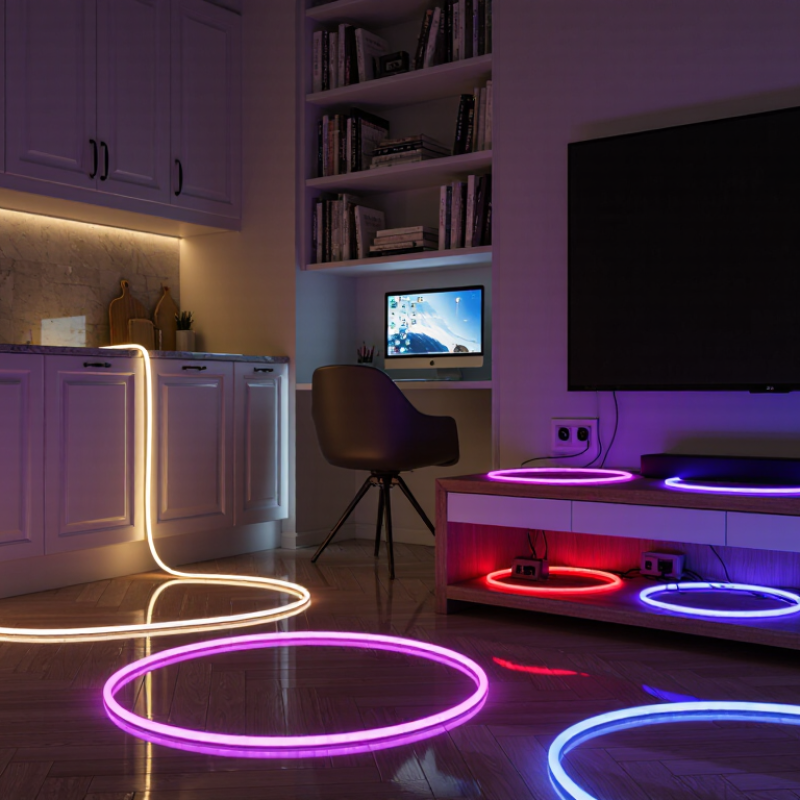
LED strip lights are flexible circuit boards with small light-emitting diodes arranged along their length. They fit under cabinets, around shelves, and along ceiling edges. Their output depends on diode density, brightness, color options, and power requirements. A longer strip is not automatically better. Without enough power, its far end may look dimmer.
The main types serve different needs.
Single-color strips provide steady white or colored light, useful for work areas or simple accent lighting.
Tunable-white strips shift between warm and cool white, which can make a room feel softer or more alert.
RGB strips mix red, green, and blue for changing colors, while RGBW models add a dedicated white diode for more natural white light.
Addressable strips let sections display different effects, but setup can be less straightforward. Not always worth the extra complexity.
Tips: Measure the full route before buying, and check the strip’s voltage and compatible power supply. Clean and dry the mounting surface; adhesive often struggles on dusty, rough, or warm surfaces. For damp locations, check the stated water-resistance rating, and keep connectors protected. Test a short section first. It can reveal color or brightness issues before installation.
Brightness should be judged by delivered light, not a strip’s wattage or advertised peak figure. Check lumens per meter, then match output to the task: a softly lit shelf needs less than a kitchen worktop. A diffuser can smooth visible dots, but it may also reduce perceived brightness. Test a short sample in the actual space.
Color quality matters just as much. A high color-rendering index (CRI) can help food, wood, and fabric look more natural, but CRI alone does not describe every color shift. The Illuminating Engineering Society’s TM-30-20 method reports fidelity and gamut separately, offering a fuller picture. Compare those figures when available. Numbers help, but a quick side-by-side viewing test still catches surprises.
Efficiency depends on the complete setup, including the driver and controller. The U.S. Department of Energy’s Energy Saver guidance says LEDs use at least 75% less energy than incandescent lighting and can last up to 25 times longer; those broad figures are not a guarantee for every strip system. Check watts per meter and calculate total load before installation. Small detail, big difference. A dimmer or controller can add a little consumption, too, and packaging rarely makes that easy to compare. Even careful specs leave room for judgment.
What Are the Best LED Strip Lights for Buyers?
Choosing the right strip starts with its power needs and where it will run. Check the rated watts per meter, then multiply by the total length. A five-meter strip rated at 10 watts per meter needs 50 watts. Choose a compatible power supply with roughly 20 percent extra capacity, and match its voltage to the strip. Don’t guess. For longer runs, voltage drop can make the far end look dimmer; shorter sections or power fed from both ends may help, if the product instructions allow it.
Length matters in real rooms. Measure the route, including corners and gaps, before ordering. A strip behind a desk may need less length than one tracing ceiling edges. Also check where you can cut it; cutting between marked points can damage the strip. I’d leave a little slack near the power connection. It’s easy to overlook.
Tips: Match the controller to the strip type. Single-color strips need different controls from RGB or tunable-white strips. Check whether the controller supports the strip’s voltage and total load, and whether you want buttons, a remote, or app control. Keep the power supply ventilated and accessible. A neat setup is useful, but hiding a supply in a cramped space can create problems.
Before buying LED strip lights, measure each run and note where the power outlet sits. A strip that reaches the shelf may still leave its adapter awkwardly exposed. Check the required voltage and power supply rating; mismatched components can cause flickering or excess heat. Some strips can be cut only at marked points. Measure twice. A corner may also need a compatible connector rather than a sharp bend.
Match the strip’s protection rating to its location. Dry bedrooms and damp kitchens have different needs, and outdoor areas require products specifically rated for outdoor use. Check the manufacturer’s installation instructions and keep the power supply away from water and heat. Clean, dry surfaces help adhesive backing hold, but paint or textured walls may weaken the bond. I’d avoid assuming that “easy install” means suitable for every surface; that shortcut can lead to peeling or unsafe wiring. Disconnect power before trimming or adjusting connections, and don’t cover the strip with fabric or insulation.
Tips: Test the lights before mounting them. Route cables away from walkways, and leave the adapter accessible for inspection. If a connector feels loose, stop and check the fit instead of forcing it. A little extra planning saves rework.
The right LED strip depends on where it will sit and what it needs to do. Under kitchen cabinets, a bright, neutral-white strip can make chopping easier and show food colors more naturally. Look for a high color-rendering rating when accurate color matters. For a bedroom shelf, softer, warmer light may feel calmer.
Small details count. Check the strip’s width, cut marks, and connector options before measuring your space. Measure twice. A strip that is too wide may not fit behind a narrow ledge, while a cut in the wrong place can leave a section unusable.
Moisture and heat matter, too. Choose a strip with a suitable protection rating for bathrooms or covered outdoor areas, and follow the manufacturer’s placement guidance. For long runs, check the power supply requirements; brightness can become uneven if the setup is not matched properly.
Clean, dry surfaces help adhesive stay put, though extra clips may be useful beneath a desk or along a textured wall. Dimmer controls and adjustable color can add flexibility, but they are not essential in every room. It is easy to overbuy features. A simple strip may be the better fit when the goal is just clear task lighting.
Quality Commercial LED Lighting specializing in LED Tubes, LED Bulbs, LED Troffers, LED Door Kits, LED Retrofit Kits, LED Panels, LED Spot Lights, LED Wall Packs, LED Lamps, LED Drivers, LED Accessories, LED Lights, LED Sales, and LED Manufacturing. Headquartered in Atlanta, Georgia, USA.