
Voltage problems are often invisible until equipment begins to behave strangely. A motor may hum louder, lights may flicker, or a control panel may restart during a busy shift. These symptoms can have several causes, so voltage variation should be measured rather than guessed. An Electronic Voltage Stabilizer can help keep supply voltage within a suitable range when the incoming power fluctuates.
Its value depends on the application. A stabilizer may support sensitive electronics, production equipment, and other loads that require steadier voltage. It cannot correct every power-quality issue, and it does not replace proper grounding, surge protection, or equipment maintenance. Correct sizing matters. So does checking the load type, voltage range, response time, and installation conditions before choosing a unit.
Power-quality engineer Dr. Alexander Kusko has written about power electronics and power quality. However, without a verifiable source for a specific quotation, it would be misleading to present invented words as his. A concise editorial summary of the engineering principle is: “Stable voltage helps equipment perform consistently, but the right solution starts with measurement.” Not a direct quote. That distinction matters. Even a well-designed stabilizer may disappoint when the real problem is undersized wiring, a poor connection, or a load that exceeds its rating. This guide explains when an Electronic Voltage Stabilizer is useful, what it can—and cannot—do, and which practical details deserve attention before purchase.
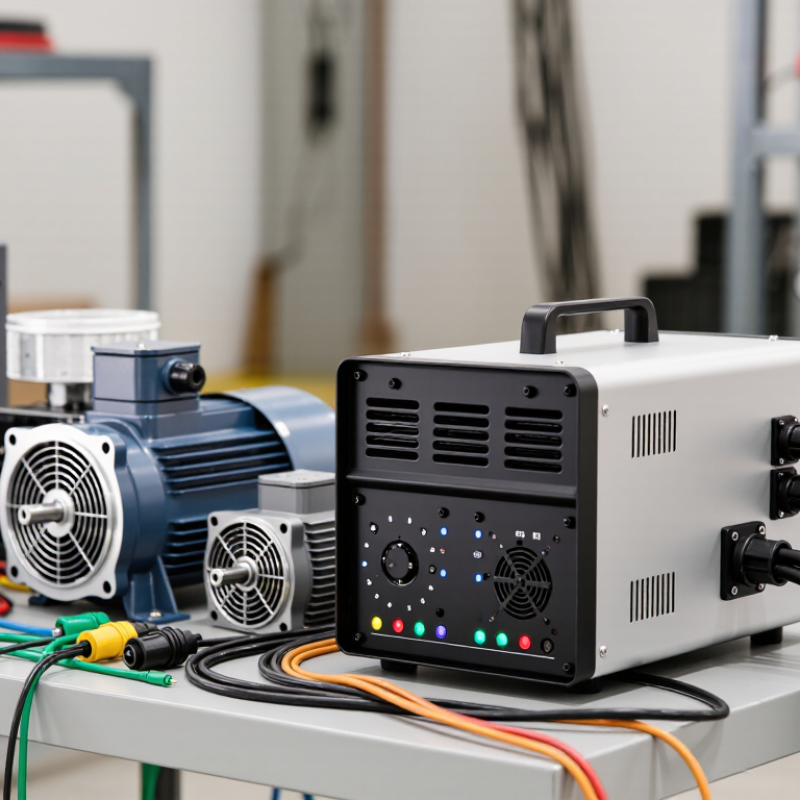
An electronic voltage stabilizer monitors incoming voltage and adjusts it to keep the output within a useful range. A sensing circuit checks the supply repeatedly, comparing it with a preset reference. If the voltage rises or falls, control electronics respond by switching transformer taps or regulating power through electronic components. The exact method depends on the stabilizer’s design.
For example, a workshop supply may dip when a compressor starts. The stabilizer detects the change and corrects the output, helping connected equipment receive steadier voltage. Small changes matter. This adjustment can reduce stress caused by persistent overvoltage or undervoltage, but it does not make every supply problem disappear. Response time and correction range vary between units.
A stabilizer is not a backup power source. If the supply fails completely, it generally cannot keep equipment running. Nor can it compensate safely for a load that exceeds its rated capacity. Check the unit’s input range, output rating, and expected load before installation. That sounds simple. It isn’t always: startup current, cable condition, and the sensitivity of the equipment can complicate the choice. A qualified technician can assess those details and confirm that the stabilizer suits the installation.
IEEE 1159 defines a voltage sag as a reduction in RMS voltage to 0.1–0.9 per unit of nominal voltage. The event lasts from half a cycle to one minute. “Per unit” simply compares the measured voltage with the system’s rated value.
A 0.8 p.u. reading, for example, means voltage has fallen to 80 percent of nominal. Brief, but noticeable.
At 60 Hz, half a cycle is about 8.3 milliseconds; at 50 Hz, it is 10 milliseconds. Sags can occur when large motors start or when faults affect nearby circuits. A computer may restart, while a control panel could drop out before the lights visibly dim. That mismatch can be confusing.
An electronic voltage stabilizer may help manage longer or repeated voltage variations, depending on its design and response time. It should not be assumed to correct every fast sag: some events begin and end faster than the device can respond.
Check equipment specifications, measure voltage at the load, and consider whether sensitive devices need a UPS or other protection. A stabilizer is not a cure-all. Sags also vary in depth and duration, so one reading may not tell the whole story.
Why Do You Need an Electronic Voltage Stabilizer?
Why Equipment May Need Protection Beyond ANSI C84.1’s ±5% Service-Voltage Range
ANSI C84.1’s Range A commonly permits service voltage to vary by ±5% from nominal. But that boundary describes utility delivery, not necessarily the voltage at every equipment terminal. Long cables, overloaded circuits, and motor starts can add local voltage drop. That distinction matters. A control cabinet may see a brief dip while a nearby wall meter still appears normal. Sensitive electronics, relays, and variable-speed drives may need steadier input than the service range alone guarantees.
The U.S. Department of Energy’s Improving Motor and Drive System Performance sourcebook reports that a 1% voltage imbalance can create roughly 6–10% current imbalance in three-phase motors. That is not the same as a simple high-or-low voltage condition, but it shows why small electrical deviations deserve attention. Extra current can mean more heat inside a motor. A stabilizer may correct sustained voltage variation; it will not necessarily fix imbalance, wiring faults, harmonics, or very short sags. The wrong device can give false confidence.
Tips: Log voltage at the equipment during normal operation and startup. Compare readings with the equipment’s nameplate limits. If dips last only a few cycles, ask a qualified electrician whether ride-through protection is more suitable. Small changes add up. And measurements matter.
| Situation or equipment | Illustrative voltage condition | What the service-voltage range tells you | Why additional protection may be considered | Possible response |
|---|---|---|---|---|
| Nominal 120 V service | ANSI C84.1 Range A service-voltage limits are 114–126 V (±5% of 120 V). | This describes an acceptable steady-state service-voltage range under the standard’s specified conditions; it is not a promise of perfectly constant voltage. | Some loads may have tighter operating requirements, and voltage at equipment terminals can differ from the service point because of wiring and load conditions. | Check the equipment nameplate and measure voltage where the equipment connects. Consider regulation only if measurements and equipment requirements justify it. |
| Nominal 240 V service | For a 240 V nominal service, ±5% corresponds to 228–252 V. | The range is a service-voltage reference, not an equipment-specific tolerance or a guarantee that every connected load sees the same voltage. | Long branch circuits, high starting current, or uneven loading can contribute to voltage drop at a load. | Have a qualified electrician check connections, conductor sizing, loading, and voltage at the load before selecting a stabilizer. |
| Equipment with a narrow input specification | The equipment’s permitted input range may be narrower than the applicable service-voltage range; consult its manual or nameplate. | ANSI C84.1 addresses electric-power-system voltage ranges; it does not define the acceptable input range for every individual product. | A device can be within the service range yet outside a particular load’s specified operating range. | Use a correctly rated voltage regulator only when its input range, output accuracy, capacity, and load compatibility meet the equipment requirements. |
| Motor during a voltage sag or heavy start | A brief drop can occur when a large motor starts or when the supply is disturbed; duration and depth matter. | A steady-state service range does not by itself describe short-duration sags or the voltage seen during motor starting. | For an induction motor, starting torque is approximately proportional to the square of applied voltage under comparable conditions, so reduced voltage can impair starting performance. | Investigate supply capacity, wiring, and starting method. A stabilizer must be specifically sized for motor starting current and duty. |
| Repeated or prolonged undervoltage | Voltage remains low over time or frequently approaches the equipment’s minimum input rating. | A range limit is not a substitute for diagnosing a persistent supply or installation problem. | Some loads may malfunction, draw increased current, overheat, or shut down, depending on their design and the severity and duration of the condition. | Record voltage over time and contact the utility or a qualified electrician to identify the cause. Use regulation only as an appropriate, correctly sized solution. |
| Brief surges or lightning-related transients | Very short voltage impulses can occur even when average service voltage is within its normal range. | A steady-state ±5% range does not specify protection from transient overvoltages. | A voltage stabilizer is not automatically a surge protective device, and its transient protection depends on its design and specifications. | Use a properly selected and installed surge protective device where required; follow applicable electrical codes and equipment guidance. |
| Outages, frequency variation, or waveform distortion | A power interruption, frequency deviation, or harmonic distortion is a different power-quality condition from steady-state voltage variation. | ANSI C84.1 voltage ranges alone do not ensure continuous power, stable frequency, or a low-distortion waveform. | A standard stabilizer may not correct these problems; capabilities vary by product and some conditions require a different solution. | Consider a UPS for ride-through or backup power, or suitable power-conditioning equipment for diagnosed waveform issues. Verify the required function and ratings. |
Note: Voltage examples are illustrative. ANSI C84.1 service-voltage limits do not replace the equipment manufacturer’s specifications, an on-site assessment, or applicable electrical codes. A stabilizer is appropriate only when the voltage problem is verified and the device is correctly selected for the supply and load.
An electronic voltage stabilizer keeps supply voltage within a set range when the incoming line rises or falls. A refrigerator may dim nearby lights as its compressor starts. In that moment, voltage correction can help protect sensitive equipment from repeated fluctuations. It cannot replace a backup supply during an outage or repair faulty wiring.
Relay stabilizers switch between preset voltage taps. They are usually straightforward and affordable, but correction happens in steps. You may hear a click as a relay changes position. Servo stabilizers move a motor to adjust a variable transformer, giving smoother correction across a wider range. This takes longer, and moving parts can need maintenance. Static stabilizers use electronic components to correct voltage without mechanical movement. They can respond quickly, though their cost and design complexity may be higher.
The right choice depends on the load, voltage variation, and required response time. Check measured voltage readings and equipment starting currents before selecting a unit. A fast response sounds ideal, but it is not the only concern. Room conditions, service access, and the stabilizer’s rated capacity matter too. Selection is not always neat; real-world loads can behave differently from their nameplate figures.
Typical voltage-correction response times vary by design. Static stabilizers can respond in milliseconds, relay stabilizers switch between preset taps, and servo stabilizers adjust voltage using a motor-driven mechanism.
Illustrative representative values: actual response times depend on the stabilizer design, operating conditions, and how response time is specified. A logarithmic scale is used to show the differences clearly.
How to Size a Stabilizer for Load kVA, Startup Current, and Duty Cycle
Choosing a stabilizer starts with the load, not the equipment label alone. Add the running kVA of devices that may operate at the same time. For a single-phase load, kVA is approximately volts × amps ÷ 1,000. For three-phase equipment, use the rated data or a qualified electrician’s calculation. Leave capacity headroom, especially when loads may expand. Too much headroom is not always better; the right margin depends on the equipment and operating conditions.
Motors, compressors, and pumps can draw several times their normal current during startup. Check the equipment’s starting-current data, then confirm that the stabilizer can handle that surge for the required duration. A unit sized only for running kVA may trip when a pump starts. Duty cycle matters, too: frequent starts or long operating hours can increase heat. Consider the stabilizer’s continuous rating, input-voltage range, and installation temperature. These details are easy to overlook.
Tips: List each load’s running kVA, starting current, and expected operating time. Ask an electrician to verify the figures and startup sequence. Real installations can behave differently from a spreadsheet, so leave room to review your assumptions.
Quality Commercial LED Lighting specializing in LED Tubes, LED Bulbs, LED Troffers, LED Door Kits, LED Retrofit Kits, LED Panels, LED Spot Lights, LED Wall Packs, LED Lamps, LED Drivers, LED Accessories, LED Lights, LED Sales, and LED Manufacturing. Headquartered in Atlanta, Georgia, USA.