China has become a critical production base for Led Lamps, serving residential, commercial, industrial, and outdoor projects worldwide. Yet identifying the “top” manufacturer requires more than checking export volume or factory size. Product consistency, photometric testing, driver quality, certifications, warranty support, and documented project experience matter equally.
The U.S. Department of Energy reports that LED products can use at least 75% less energy than incandescent lighting. They may also last up to 25 times longer. These figures explain the continuing shift toward LED technology. The International Energy Agency’s Energy Efficiency 2023 report also identifies efficient lighting as an important pathway for reducing electricity demand. The opportunity is substantial.
The list is not simple.
China’s leading manufacturers differ considerably. Some focus on architectural lighting, while others specialize in street lamps, high bays, panels, or smart-control systems. Their marketing language can sound similar. Their laboratory results may not be comparable. Therefore, this guide evaluates manufacturers through practical indicators, including LM-80 testing, IEC compliance, ingress protection, thermal design, efficacy, and supply-chain reliability.
Trade databases, manufacturer documentation, and recognized market research reports provide useful evidence. However, they do not replace independent sampling or factory verification. A large export record does not automatically prove superior quality. That is an important limitation.
The following overview examines China’s prominent Led Lamps manufacturers and explains where each company performs best. It also considers customization capability, after-sales responsiveness, and real-world operating conditions. For buyers, the best choice may not be the largest supplier. It may be the manufacturer that delivers stable light output, honest specifications, and dependable support after installation.
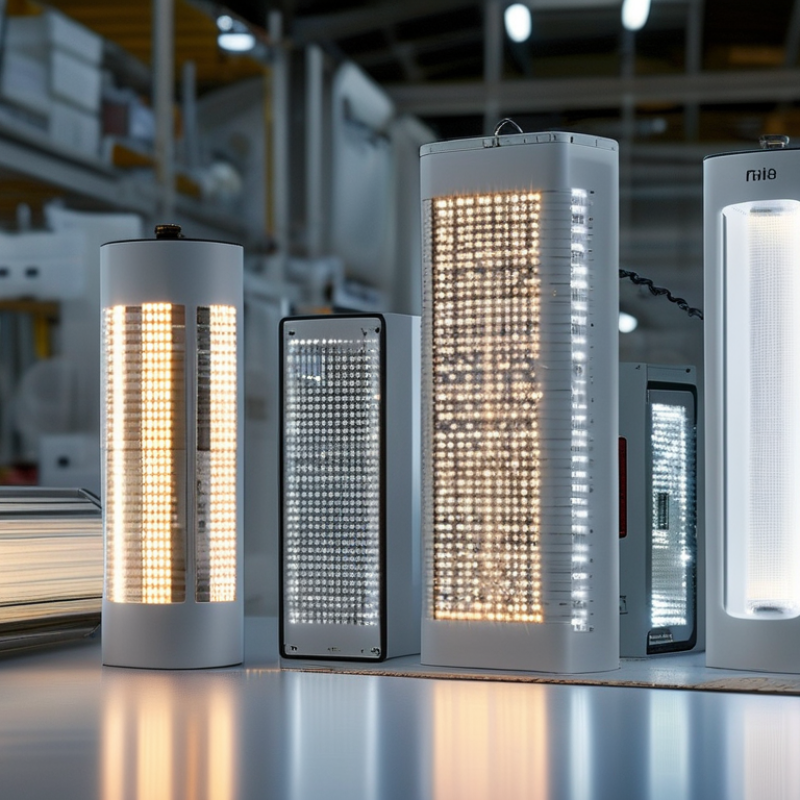
A top LED lamp manufacturer in China is defined by more than production volume. It combines engineering experience, stable materials, and disciplined quality control. The factory should understand heat management, optical design, driver performance, and real installation conditions. A bright sample means little if its output falls quickly.
Reliable manufacturers test lamps under controlled conditions. They check lumen output, color consistency, flicker, power factor, and electrical safety. Thermal testing is essential. Engineers may run lamps inside hot chambers while recording temperature changes and light decay. Independent laboratory reports add credibility. Clear test records matter more than polished sales claims.
Traceability also separates strong manufacturers from ordinary suppliers. Each batch should connect to component records, inspection results, and aging data. Skilled teams can adjust beam angles, color temperatures, housings, and packaging for different projects. They should also explain limits honestly. No factory is perfect. Even experienced teams may overlook a driver variation or underestimate outdoor humidity. The important question is how quickly they identify and correct the problem. Certifications should match the target market, not simply decorate a brochure. Samples must be tested repeatedly, not judged after one successful demonstration. A dependable manufacturer communicates clearly, protects consistency, and supports the product after delivery.
Who Are China’s Top LED Lamps Manufacturers?
China’s leading LED lamp manufacturers often specialize rather than produce every lighting product equally well. Some focus on commercial downlights, using deep aluminum housings and controlled beam angles for offices and retail spaces. Others build outdoor floodlights with sealed enclosures, reinforced glass, and corrosion-resistant coatings. Their specialties usually reflect factory equipment, engineering teams, and long-term project experience.
Reliable manufacturers should provide photometric files, thermal test results, and clear warranty terms. They should also explain LED efficiency, color consistency, driver quality, and expected operating life. During factory evaluations, buyers can inspect assembly lines, aging-test rooms, and sample inspection records. Independent certification and compliance documents matter, but paperwork alone cannot prove stable production. A sample may look excellent. The delivered batch might still vary.
Tips: Request samples from different production lots. Test them for flicker, heat, brightness, and color shift. Ask how failures are recorded and corrected. Visit the facility when possible. Do not choose only by the lowest quotation. That shortcut often creates higher replacement costs. No manufacturer is perfect, including experienced ones, and product specifications can be misunderstood. Clear drawings, realistic testing, and regular communication reduce that risk.#+#+#+#+
Who Are China’s Top LED Lamps Manufacturers?
China’s leading LED lamp manufacturers compete through practical products and measurable performance. Their portfolios commonly include residential bulbs, commercial downlights, streetlights, floodlights, and industrial high-bay fixtures. The U.S. Department of Energy reports that LED products use at least 75% less energy than incandescent lighting. They can also last up to 25 times longer. These figures explain why efficiency remains a central manufacturing target.
Top producers now combine high-efficiency LED chips with constant-current drivers, aluminum heat sinks, and optical lenses. Some commercial lamps exceed 180 lumens per watt under controlled testing. That result can fall in dusty warehouses or poorly ventilated ceilings. A small detail matters. Thermal management affects real service life. Manufacturers therefore offer IP65-rated outdoor housings, surge protection, and Zhaga-compatible modules for easier maintenance. Many also provide 0–10V, DALI, or wireless controls for dimming and occupancy management.
The International Energy Agency identifies LEDs as a major path toward lower lighting electricity demand. Meanwhile, the U.S. DOE notes that connected lighting can improve control beyond simple replacement. Leading factories increasingly use automated optical testing, integrating-sphere measurements, and aging tests. Buyers should request LM-79 performance reports and LM-80 data for LED packages. Yet reports do not guarantee every installation. Color shift, driver quality, and unstable voltage still deserve field verification. That is where specifications can feel incomplete. Performance depends on the whole fixture, not only the chip.
| Anonymized Manufacturer Profile | Primary Product Categories | Key LED Technologies | Typical Technical Features | Common Standards and Certifications | Main Application Areas |
|---|---|---|---|---|---|
| Profile 01 General LED lamp producer |
LED bulbs, candles, spotlights, downlights, tubes and panel lights | SMD LED packages, integrated drivers, aluminum heat dissipation, flicker-reduction circuits | Approximately 80–120 lm/W for mainstream indoor products; CCT options commonly range from 2700K to 6500K; dimmable versions available | IEC 60598-1, IEC 62031, EMC requirements, RoHS and CE requirements for applicable markets | Residential lighting, offices, retail stores, hotels and light commercial buildings |
| Profile 02 Outdoor lighting specialist |
Street lights, floodlights, tunnel lights, high-bay fixtures and area lights | High-power LED modules, secondary optical lenses, surge protection, programmable constant-current drivers | Typical ingress protection of IP65 or higher; common impact ratings include IK08 or above; optical distributions include Type I, II, III, IV and V | IEC 60598-2-3, IEC 60598-2-5, IEC 61000 series, IP Code IEC 60529 and applicable regional road-lighting requirements | Roads, parking areas, industrial yards, sports facilities, tunnels and public infrastructure |
| Profile 03 Commercial and architectural lighting specialist |
Track lights, linear fixtures, recessed downlights, magnetic systems and decorative luminaires | High-CRI LED packages, COB modules, precise reflectors, low-glare optics and tunable-white systems | CRI values of 80+ are common, while 90+ is available for color-critical projects; beam angles commonly range from 15° to 60° | IEC 60598, IEC 62471 photobiological safety, LM-79 testing and market-specific EMC requirements | Retail, museums, galleries, offices, hospitality venues and premium residential interiors |
| Profile 04 Industrial lighting specialist |
LED high-bay lights, low-bay lights, vapor-tight fixtures and hazardous-area lighting | Thermal-management systems, modular LED boards, wide-voltage drivers and reinforced sealing structures | Common input ranges include 100–277 VAC or 100–347 VAC; higher-power fixtures may exceed 150 lm/W under selected conditions | IEC 60598-1, IEC 60598-2-1, IEC 62471, IP65/IP66 requirements and applicable hazardous-location certification schemes | Factories, warehouses, logistics centers, workshops, production lines and large indoor facilities |
| Profile 05 Smart lighting solution provider |
Connected bulbs, smart panels, networked street lights, sensors and lighting-control gateways | DALI-2, 0–10 V, Bluetooth Mesh, Zigbee, Wi-Fi, occupancy sensing and daylight harvesting | Remote dimming, scheduling, energy monitoring, scene control and integration with building-management systems | DALI-2 specifications, IEC 62386, IEC 60598, EMC standards and applicable wireless-radio regulations | Smart buildings, campuses, offices, hotels, municipal lighting networks and energy-saving retrofits |
| Profile 06 Solar LED lighting specialist |
Solar street lights, solar garden lights, integrated solar floodlights and off-grid area lights | Photovoltaic charging, lithium iron phosphate batteries, MPPT charging and automatic dusk-to-dawn control | Standalone operation, programmable lighting schedules, battery protection and optional motion-based power management | IEC 60598, IEC 62133 battery-safety requirements where applicable, IP65 or higher and regional photovoltaic regulations | Rural roads, pathways, parks, residential communities, remote facilities and off-grid sites |
| Profile 07 LED module and OEM/ODM supplier |
LED boards, light engines, customized luminaires, replacement modules and private-label products | MCPCB and FR-4 boards, COB and SMD configurations, Zhaga-compatible interfaces and customized optics | Custom power ratings, color temperatures, beam angles, mounting dimensions and driver configurations | IEC 62031, IEC 60598, LM-80/TM-21 evaluation methods and Zhaga specifications where applicable | Lighting brands, electrical distributors, retrofit projects, contract manufacturing and project-specific installations |
Note: Manufacturer identities are intentionally omitted. Technical values represent common product specifications and applicable industry standards rather than guaranteed specifications for any individual supplier.
China’s leading LED lamp manufacturers are often identified by their systems, not their advertising. A reliable factory should operate under ISO 9001 quality management procedures. Its products should meet applicable GB and IEC safety requirements. Export models may also require CE, RoHS, or other market-specific approvals. Certifications must match the exact model, not merely the factory name.
In practical factory audits, I look for controlled production details. LED chips, drivers, and housings should have batch records and incoming inspection reports. During assembly, workers need clear torque settings and wiring instructions. Finished lamps should undergo electrical safety tests, including insulation resistance and grounding checks. Photometric testing with an integrating sphere can verify lumen output, color temperature, and power factor. Thermal testing matters too. Poor heat dissipation can shorten service life quickly.
Stronger manufacturers also perform aging tests before shipment. A 48-hour burn-in can reveal unstable drivers, loose connections, or early light failures. IP testing is useful for outdoor products, but the rating must reflect the actual design. I have seen test reports that looked complete but lacked traceable sample numbers. That weakness deserves attention. A factory may hold several certificates while still showing inconsistent color or weak packaging control. Regular sampling, third-party verification, and clear corrective-action records provide more dependable evidence than polished brochures. Quality control is never perfectly static. Suppliers change, processes drift, and even good factories need review.
Who Are China’s Top LED Lamp Manufacturers?
How to Compare and Choose a Chinese LED Lamp Manufacturer
China has many capable LED lamp manufacturers, but “top” should mean more than a polished website. During supplier evaluations, I look for stable production, clear technical documents, and consistent sample quality. A serious factory should explain its LED chips, drivers, thermal design, beam angle, and color temperature without vague promises. Ask for test reports from recognized laboratories, product certifications for your target market, and a traceable quality-control process.
Request samples from at least three manufacturers. Compare brightness, flicker, heat, color consistency, wiring, and packaging. Test the lamps after extended operation, not only after opening the carton. Factory visits can reveal useful details, such as aging-test areas, calibration records, and how rejected products are handled. However, one visit is not proof of long-term reliability. My own evaluations sometimes favored a smaller factory after its samples performed better, which reminded me not to judge capacity by building size alone.
Tips: Define your application before requesting prices. Indoor retail lighting, outdoor fixtures, and industrial lamps need different designs. Check minimum order quantities, lead times, replacement policies, warranty conditions, and spare-part support. Confirm whether the quoted price includes testing, packaging, and customized labeling. Keep every specification in writing. A low quotation can become expensive when thermal problems, color shifts, or delayed shipments appear. Ask the manufacturer to produce a pilot batch before full production. Measure it carefully.
Use this buyer-side evaluation framework to compare Chinese LED lamp manufacturers without relying on brand reputation alone. The suggested weights reflect practical sourcing priorities: compliance, efficiency, reliability, customization, delivery performance, and after-sales support.
The criteria are aligned with commonly used lighting requirements and testing references, including IEC 60598, IEC 62471, EN 55015, LM-80/TM-21, and ISO 9001. Scores represent evaluation weights rather than company market share or brand rankings.
Quality Commercial LED Lighting specializing in LED Tubes, LED Bulbs, LED Troffers, LED Door Kits, LED Retrofit Kits, LED Panels, LED Spot Lights, LED Wall Packs, LED Lamps, LED Drivers, LED Accessories, LED Lights, LED Sales, and LED Manufacturing. Headquartered in Atlanta, Georgia, USA.