
Choosing the right Wildlife Night Camera requires more than comparing megapixels and advertised detection ranges. In real outdoor use, fog, rain, moving branches, and uneven terrain can change results quickly. A camera that performs well in a dry forest may struggle beside a humid wetland. Global buyers should examine infrared illumination, trigger speed, battery life, image clarity, weather sealing, and mobile connectivity. These details affect whether a fox appears sharply at midnight or becomes a blurred shape near the frame edge.
Reliable recommendations should come from field testing, technical specifications, and clear manufacturer support. Look for cameras with adjustable sensitivity, quiet infrared operation, secure data storage, and durable housings. No camera wins every night. Some models promise impressive range but produce weak images beyond moderate distances. Others offer excellent video but consume batteries quickly in cold climates. That trade-off deserves honest attention. Buyers should also respect local privacy, wildlife protection, land-access, and data rules before installation. Avoid placing cameras near homes, public paths, or sensitive nesting areas without proper permission. Responsible observation protects animals and people.
This guide compares practical options for different climates, budgets, and monitoring goals. It considers image quality, nighttime performance, setup effort, reliability, and long-term ownership costs. The strongest choice may not be the most expensive model. It should be the one that keeps recording clearly, safely, and consistently where you actually need it.
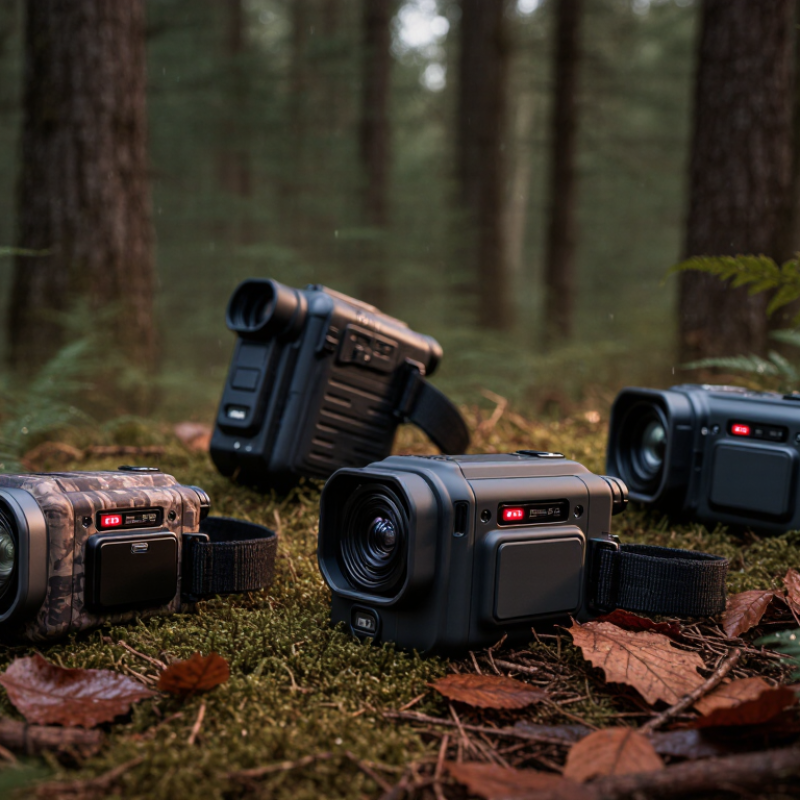
Understanding wildlife night cameras starts with their core features. These devices combine infrared illumination, motion detection, image sensors, and weather protection. Infrared light helps observe animals without visible flashes. However, some species may still notice faint red glow. No camera is completely invisible.
Trigger speed, detection range, and recovery time affect real field results. A fast trigger can capture a fox entering the frame, while a slow recovery may miss its exit. Infrared images also need enough sensor detail for fur patterns, antlers, or body markings. The WWF Living Planet Report 2024 recorded a 73% average decline in monitored wildlife populations between 1970 and 2020. Reliable monitoring therefore matters, especially in fragile habitats. Storage capacity, battery performance, cellular coverage, and IP weather ratings should match the location. A specification sheet can still mislead. Cold nights often reduce battery life more than expected.
Tips: Choose adjustable infrared strength and test the camera at animal height. Select a wide detection angle for trails, but avoid moving leaves. Use rechargeable power only when safe, practical, and locally permitted. The camera should record date, time, temperature, and location when possible. These details improve later analysis. Buyers should also check data privacy rules, radio approvals, and local wildlife research requirements. Small setup errors remain common. A tilted lens can turn useful evidence into empty ground.
Infrared illumination is a core feature of wildlife night cameras. The chart compares common infrared wavelengths used for nocturnal imaging. Photon energy is calculated from the physical relationship E = hc/λ: shorter wavelengths provide slightly higher photon energy, while 940–950 nm illumination is generally less visible to wildlife and nearby observers than 850 nm light.
Choosing a wildlife night camera starts with the habitat, not the advertised sensor. Forest trails often need infrared illumination, because leaves and branches block weak natural light. No visible red glow helps reduce disturbance. It suits shy mammals near narrow paths and feeding areas. However, infrared images may flatten depth and hide subtle fur patterns.
In dense darkness, thermal sensing can locate warm animals through light vegetation. It works well for open grasslands, rocky slopes, and winter fields. Yet thermal footage usually lacks identifying detail, especially between similar-sized species. Starlight-sensitive cameras preserve more natural images when moonlight exists. They perform poorly beneath thick canopy or during heavy cloud cover. I have found that “full color at night” often depends heavily on nearby light.
Wetlands require careful testing. Reflections from water can confuse exposure systems, while mist softens infrared footage. A camera with adjustable illumination and sealed housing is more practical there. Snowy habitats need batteries that tolerate low temperatures and mounts that resist shifting ice. Motion detection also needs patience. Wind-blown grass can trigger hundreds of empty clips. I still review sample footage after several nights, because a setting that works in one meadow may fail beside a darker tree line.
For global buyers, a wildlife night camera should be judged in field conditions, not only on a bright sample image. Image quality depends on infrared illumination, lens clarity, sensor performance, and compression. A fox at 12 meters may appear sharp in daylight but become a gray shape at midnight. Look for clear fur edges, readable timestamps, and balanced contrast under moonlight and complete darkness. Black-and-white night images usually reveal movement better than overly bright frames. Color night modes can look attractive, yet they often need ambient light. My own tests are not perfect; rain, fog, and a dirty lens can change results quickly. Test several nights.
Tips: Measure detection range separately from useful recognition range. A sensor may detect motion at 25 meters, while the camera identifies an animal only at 12 meters. Walk across the frame, not toward it, because angle affects detection. Record distance, temperature, wind, and vegetation. These notes make comparisons more reliable across climates. Avoid trusting one advertised number.
Trigger speed matters when an animal crosses a narrow gap. A delay of half a second can capture a tail instead of the animal. Check trigger time, recovery time, and the number of images captured per event. Fast settings can increase false triggers from moving grass. Slow settings may miss a cautious animal. Choose adjustable sensitivity and short recovery when trails are busy. Choose longer recovery when battery life matters. Review original files, not resized phone previews. Also inspect night focus at the actual distance. Small details matter. A camera that performs well in a dry garden may struggle in humid forest air.
Top Wildlife Night Cameras for Global Buyers
Choosing the right night camera starts with power, storage, connectivity, and weather protection. In field testing, cold nights reduced battery life more than expected. A camera rated for low temperatures is safer for mountain habitats. Solar support can help, but shaded forests may receive too little sunlight. Keep a replaceable battery option nearby.
Storage needs depend on trigger frequency and image quality. A busy trail can fill a memory card within days. Choose expandable storage and check whether the camera overwrites older files. Cellular connectivity is useful for distant locations, but coverage differs sharply between regions. Confirm local network compatibility before installation. Wi-Fi works well near buildings, though it is less practical in remote terrain.
Tips: Test the camera for one week before leaving it unattended. Check night images, signal strength, battery drain, and date accuracy. Use a sealed enclosure with a firm gasket, but inspect it after heavy rain. Water resistance ratings are helpful, not perfect. Mud, condensation, and insects can still affect performance. Mount the camera away from direct sunrise, moving branches, and likely splash zones. I sometimes prioritize connectivity too much; reliable local storage may matter more when networks fail.
| Camera Type | Night Imaging | Power Options | Storage | Connectivity | Weather Protection | Operating Range | Best For |
|---|---|---|---|---|---|---|---|
| Standard Infrared Trail Camera | 940 nm no-glow infrared LEDs; 20–30 m detection and illumination range; still images and 1080p video | 8 AA alkaline or lithium batteries; optional external 6–12 V power input on some configurations | microSD or SD card, commonly up to 32–128 GB; Class 10 recommended for video | No wireless connection; files are retrieved manually | Typically IP66-rated enclosure with sealed battery compartment | Approximately −20°C to 60°C | Remote forests, conservation surveys, and low-maintenance deployments |
| High-Resolution Infrared Camera | 940 nm no-glow illumination; 25–35 m range; 20–32 MP still images and 2.7K or 4K video options | 8 or 12 AA batteries; compatible with rechargeable lithium AA cells in suitable models | microSD card, commonly up to 256 GB; high-capacity cards are useful for 4K footage | No cellular service required; manual download through the memory card | Usually IP66 or IP67 protection against rain, dust, and temporary water exposure | Approximately −20°C to 60°C | Detailed species identification and short-term research projects |
| Cellular 4G LTE Trail Camera | 940 nm no-glow LEDs; 20–30 m range; 12–24 MP photos and 1080p video clips | 8–12 AA batteries; external 6–12 V port commonly supports a solar panel or sealed battery pack | Local microSD storage, commonly up to 128 GB, plus compressed cloud delivery where supported | 4G LTE with SIM card; network bands and coverage vary by country and carrier | IP66-rated housing is common; external antenna and cable seals should be protected from moisture | Approximately −20°C to 60°C | Sites that require remote alerts, image transmission, or live status checks |
| Wi-Fi or Bluetooth Field Camera | Low-glow or no-glow infrared; approximately 15–25 m range; 12–24 MP images and 1080p video | 6–8 AA batteries; rechargeable battery packs are available for some designs | microSD card, commonly up to 128 GB | Short-range Wi-Fi or Bluetooth for local file transfer; no cellular subscription required | Typically IP65 or IP66; wireless functions work best when the camera is accessed nearby | Approximately −10°C to 55°C | Backyards, farms, parks, and locations where the camera can be visited regularly |
| Solar-Assisted Long-Term Camera | 940 nm no-glow infrared; approximately 20–30 m range; 1080p or 2.7K video with motion-triggered recording | Integrated rechargeable lithium battery, generally 5,000–10,000 mAh, with an external solar panel | microSD card, commonly up to 128 GB; loop recording prevents storage from filling completely | Available with cellular, Wi-Fi, or offline configurations depending on the system design | IP66 or IP67 enclosure; solar panel should be mounted with a clear view of the sky and a sealed connector | Approximately −20°C to 60°C, depending on battery chemistry | Long-duration monitoring where battery replacement is difficult or costly |
| Cold-Climate Wildlife Camera | 940 nm no-glow infrared; approximately 15–25 m range; 1080p video and motion-triggered still images | 8–12 lithium AA batteries recommended for low-temperature performance; external power input may be available | microSD card, commonly up to 128 GB; use a high-endurance card for frequent recording | Offline operation is typical; cellular versions require confirmed local network support | IP66 or IP67 sealing with a gasketed housing and protected infrared window | Approximately −30°C to 55°C; battery life decreases in freezing conditions | Mountain habitats, winter tracking, and high-latitude fieldwork |
Choosing a night camera should begin with the habitat, not the feature list. In dense tropical forests, infrared cameras with fast triggers can capture animals moving between wet leaves. Select models with sealed housings and strong condensation control. In open grasslands, longer detection ranges help record distant movement. However, excessive range may create false triggers from swaying grass.
Thermal cameras suit surveys where animals blend into darkness or vegetation. They reveal body heat but usually provide less identifying detail than infrared images. Use them for counting, movement studies, or locating animals across wide areas. Standard infrared cameras work better when markings, age, or species confirmation matter. White illumination can produce clearer color images, but it may disturb sensitive wildlife.
Cold regions demand long battery life and batteries rated for low temperatures. Hot, humid locations need corrosion-resistant parts and careful memory-card protection. Solar charging can reduce maintenance, although shaded forests limit its usefulness. I have found that simple setups often produce more reliable data than complicated systems. Still, one camera rarely serves every habitat well.
Before deployment, researchers should test detection distance with local vegetation and animal sizes. Place cameras away from nests, dens, and regular travel bottlenecks when disturbance is a concern. Record dates, settings, weather, and placement details. Protect location data, obtain required permissions, and follow local wildlife guidance. Mistakes happen in the field. A missed animal can teach more than a perfect specification sheet.
Quality Commercial LED Lighting specializing in LED Tubes, LED Bulbs, LED Troffers, LED Door Kits, LED Retrofit Kits, LED Panels, LED Spot Lights, LED Wall Packs, LED Lamps, LED Drivers, LED Accessories, LED Lights, LED Sales, and LED Manufacturing. Headquartered in Atlanta, Georgia, USA.