Choosing the right wall fixture can change how a storefront, loading area, or office entrance feels after dark. Commercial Led Wall Lights come in several forms, and each directs light differently. Wall packs are common around service doors and building perimeters because they cast broad, practical light. Gooseneck fixtures suit signs and façades, placing illumination close to the surface. For a softer, more designed appearance, architectural sconces can create focused or decorative effects. Small details matter.
This guide compares these fixture types by beam direction, typical use, and installation considerations. It also explains what to check before buying, including lumen output, color temperature, mounting height, and weather protection. A bright fixture is not always the better choice; glare can bother visitors and neighboring properties. Light distribution matters. A narrow beam may suit a sign, while an open walkway often needs more even coverage. Product specifications can be confusing, and labels alone do not guarantee a suitable result. Review manufacturer data, confirm the site’s conditions, and consider a qualified lighting professional for complex layouts. The best option depends on the building, task, and desired appearance. There is no universal winner.
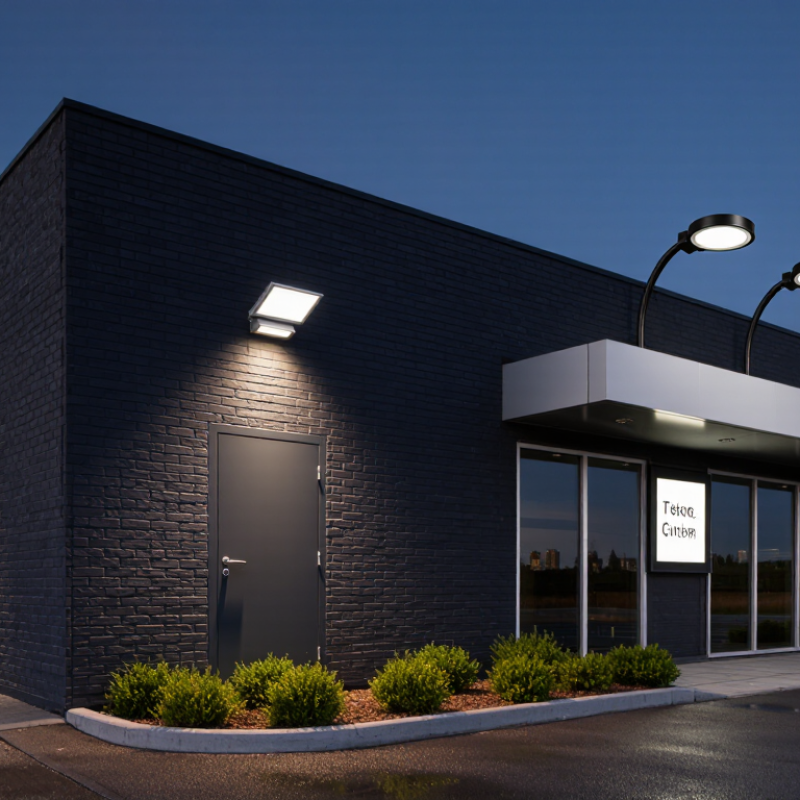
Commercial LED wall lights are easier to specify by mounting, optics, and enclosure protection than by appearance alone. Surface-mounted fixtures sit directly on masonry or metal walls, while recessed models create a flatter profile in corridors and building entrances. Adjustable arms help aim light around loading bays or doorways. Check the wall material and wiring route before choosing; a neat fixture is not useful if installation blocks maintenance access.
Optics determine where the light lands. A forward-throw distribution can send light across a walkway, while a wall-wash optic spreads it more evenly across a façade. The U.S. Department of Energy’s 2020 Lighting Market Characterization estimated LEDs represented about 48% of installed U.S. lighting stock, reflecting their broad adoption. Still, efficiency alone does not guarantee good visibility. Review photometric files, such as IES LM-79 test reports, and compare beam patterns for the actual mounting height. Small detail. A bright hotspot beside a dark doorway can still feel unsafe.
For exposed locations, check the IP rating under IEC 60529. Its first digit indicates protection against solid objects and dust; the second covers water ingress. IP65 is dust-tight and resists water jets, but it does not mean a fixture can be submerged. Rain direction, wind-driven spray, and cleaning practices matter. Not always obvious. A sheltered entry may need a different rating from a wall beside an open washdown area.
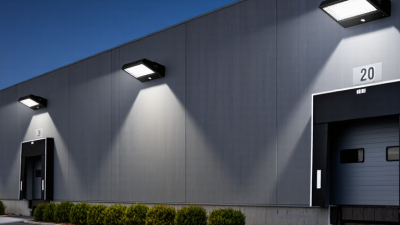
Commercial LED wall lights serve different purposes, even when they share the same exterior wall. Wall packs are practical choices for entrances, service doors, and loading areas. Their downward-directed beams can illuminate walking surfaces while limiting light above the fixture. Check the mounting height and beam distribution; a bright unit can still leave dark patches near a doorway.
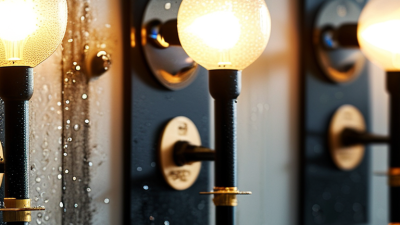
Sconces offer a more finished appearance for office entrances, covered walkways, and customer-facing façades. They can provide useful local light, but decorative housings may not spread it far. Floodlights suit broader areas, such as parking edges or building corners. Aim them carefully to avoid glare in drivers’ sightlines and uneven brightness across the pavement. Too much light happens.
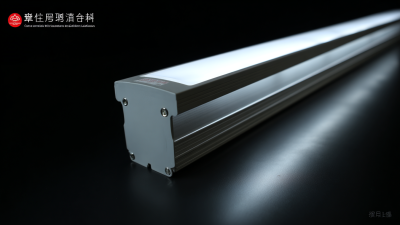
Wall-wash fixtures are designed to spread light across a vertical surface, highlighting a façade or improving visibility beside a long corridor. Their effect depends on spacing, distance from the wall, and surface texture. A rough masonry wall may look uneven under the same layout that works on smooth panels. Review photometric data, mounting conditions, and the fixture’s weather rating before choosing. On-site conditions can still surprise you. A quick nighttime test, when feasible, may reveal shadows or glare that drawings do not show.
What Are the Top Types of Commercial LED Wall Lights?
Commercial LED wall lights often deliver 100–150 lumens per watt, but the figure needs context. Efficacy measures light output against electrical power. It does not show whether light reaches the ground, doorway, or sign where it is needed. A wall pack may suit a loading area, while a shielded sconce can illuminate an entrance with less glare.
Check the fixture’s rated output and test conditions. A bare LED chip can appear highly efficient, yet lenses, housings, and drivers reduce the delivered result. For example, a 30-watt fixture rated at 120 lm/W produces about 3,600 lumens before installation conditions affect useful light. Small details matter. Mounting height and wall color can change what people actually see.
Compare efficacy alongside distribution, color quality, and controls. A broad beam may waste light on windows, while a narrow optic can leave dark patches between fixtures. Ask for photometric data, not just a headline number. Specifications can still feel a little abstract; a nighttime site check often reveals issues that a spreadsheet misses. A dimming schedule may also reduce energy use when fewer people are present.
| Fixture Type | Typical Light Distribution | Common Applications | Indicative Efficacy | Useful Selection Consideration |
|---|---|---|---|---|
| Full-Cutoff LED Wall Pack | Downward-directed; designed to limit light emitted above the horizontal plane | Building entrances, service doors, loading areas, and perimeter security lighting | 110–150 lm/W | Helps reduce uplight and glare when correctly aimed and selected for the mounting height. |
| Semi-Cutoff LED Wall Pack | Forward and downward distribution, with some light emitted at higher angles | Building perimeters, walkways, and general outdoor areas | 100–145 lm/W | Can provide broader coverage than a full-cutoff design; check local light-pollution requirements. |
| Forward-Throw LED Wall Pack | Concentrated outward and downward beam | Wide walkways, building edges, and areas where light must reach away from a wall | 105–150 lm/W | Optics can direct light toward the target area and help limit wasted light behind the fixture. |
| Adjustable LED Wall Pack | Tiltable or selectable beam direction | Irregular façades, retrofit projects, and locations with changing illumination needs | 100–145 lm/W | Confirm the fixture can be aimed securely and avoid directing light into neighboring properties. |
| Architectural LED Wall Sconce | Downlight, uplight/downlight, or shielded asymmetric distribution | Building entrances, exterior corridors, hospitality, and commercial façades | 80–130 lm/W | Often chosen for appearance and visual comfort as well as output; efficacy varies with optics and finish. |
| Linear LED Wall Washer or Grazer | Broad, controlled beam across or along a vertical surface | Façade accents, columns, signage backgrounds, and architectural features | 80–130 lm/W | Review beam angle, spacing, and aiming; optical control can matter more than maximum lumens per watt. |
Reading the figures: Efficacy is measured in lumens per watt (lm/W). The ranges are indicative of commercial LED luminaires, not guarantees for every model; actual performance depends on output, optics, color temperature, driver, and operating conditions. Compare published luminaire efficacy data and photometric files when selecting a fixture.
Commercial LED wall lights need an ingress rating matched to their exposure. Under IEC 60529, IP65 means the enclosure is dust-tight and protected against water jets. It does not mean the fixture can be submerged. For a loading-bay wall exposed to wind-driven rain and hose cleaning, IP65 is a practical baseline. Check the complete luminaire, including cable glands and installation joints, rather than relying on the rating of one component.
Small detail. The International Energy Agency reports that buildings account for about 30% of global final energy consumption. Efficient lighting can help reduce demand, but only when fixtures remain reliable in service. Before choosing a wall light, consider how water reaches it: roof runoff, spray from cleaning, and pooling near the base create different risks. A sheltered entrance may need less protection than an exposed service yard. IP ratings do not measure resistance to corrosion, impact, or long-term UV exposure.
Inspect the gasket and cable entry during installation; a pinched seal can undermine a sound rating. For harsher water exposure, compare higher-rated options against the site conditions and manufacturer’s test documentation. IEA, Buildings sector overview, 2023, provides the energy-use context; IEC 60529 defines the IP classification. A rating helps, but it cannot replace a careful site assessment.
Commercial LED wall lights include full-cutoff wall packs, adjustable floodlights, and compact wall packs for tighter spaces. Each type serves a different area. A loading dock may need broad, even illumination, while a side entrance often needs less output and better control. Avoid choosing by wattage alone. Check lumen output, mounting height, beam spread, and the surfaces that could reflect light into nearby windows.
Match output to the task. A bright wall pack can help staff read labels outside a service door, but excess light may create glare on wet pavement. I’ve seen plans that looked adequate on paper yet left dark patches near corners. A photometric layout helps reveal those gaps before installation. Still, actual finishes and obstructions can change what the calculations predict.
For flexibility, choose a fixture with a compatible 0–10 V dimming driver and control system. Dimming can reduce output during quieter hours or adjust lighting for changing site needs. Check the fixture’s minimum dimming level and confirm the control wiring requirements before specifying it. Test the settings on site. A small adjustment can matter. One weak spot in many plans is assuming every area needs the same schedule; a rear service lane and a busy entrance may call for different levels.
Typical lumen-output ranges can help match a fixture to its site. Choose a 0–10 V dimming model when adjustable light levels are needed, and confirm dimming compatibility in the product specifications.
Illustrative planning ranges, not universal product specifications. Actual output and 0–10 V availability vary by fixture and configuration.
Quality Commercial LED Lighting specializing in LED Tubes, LED Bulbs, LED Troffers, LED Door Kits, LED Retrofit Kits, LED Panels, LED Spot Lights, LED Wall Packs, LED Lamps, LED Drivers, LED Accessories, LED Lights, LED Sales, and LED Manufacturing. Headquartered in Atlanta, Georgia, USA.