
China’s automotive supply chain offers a wide range of CNC machining capabilities, from prototype work to repeat production. Yet supplier choice is not a simple price comparison. Automotive CNC Machining Parts must meet demanding requirements for dimensions, materials, surface finish, and consistent inspection. A small variation in a steering bracket or sensor housing can create costly rework. Details matter.
Shigeo Shingo, a manufacturing engineer whose work influenced modern production systems, offered a useful warning: “The most dangerous kind of waste is the waste we do not recognize.” His words apply to supplier audits, too. Hidden risks may include unclear inspection records, limited process controls, or a mismatch between sample quality and production quality. A polished website cannot prove capability. Neither can one perfect sample.
This guide examines ten China-based suppliers through practical questions: What processes do they support? Which materials and tolerances can they handle? Can they provide traceable inspection data and communicate clearly during engineering changes? The answers help buyers compare options with more context than a catalog can offer. Supplier strengths vary, and rankings should be treated as a starting point, not a verdict. Verify current certifications, equipment, lead times, and quality records directly before placing an order. A supplier may be excellent for aluminum housings but less suited to complex steel components. That distinction is easy to miss. A careful review can reveal it.
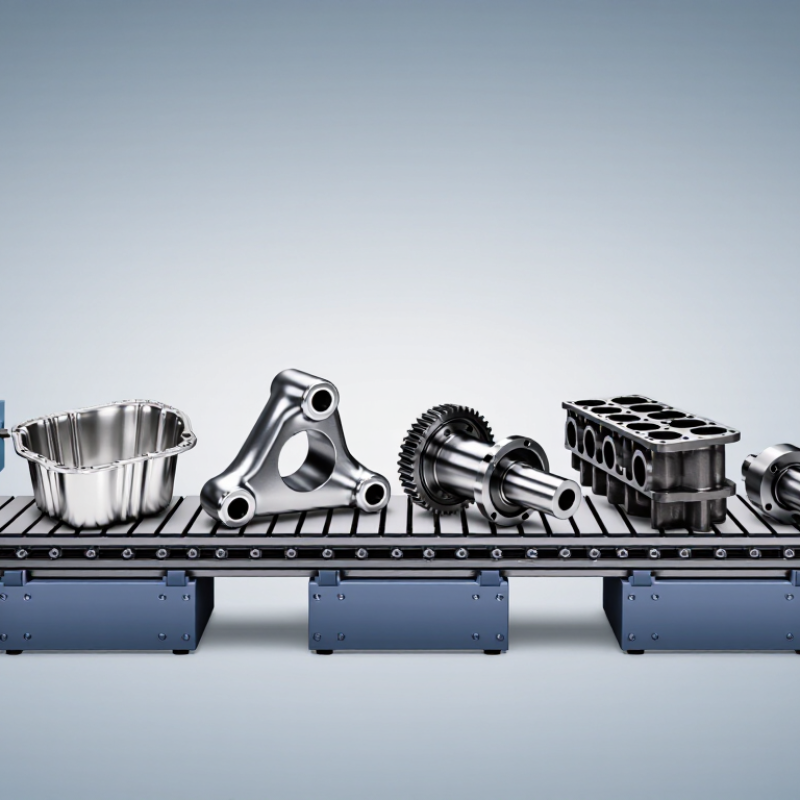
CNC machining turns digital designs into precise metal or plastic components for vehicles. Common examples include brackets, housings, shafts, and fittings. These parts support engines, steering systems, brakes, and interior assemblies. Fit matters. A small dimensional error can make installation difficult or cause unwanted vibration.
Tips: Confirm material, tolerances, and surface finish before production. Ask how parts are inspected, and review a sample when practical. Clear drawings help prevent costly rework.
In vehicle manufacturing, CNC machining is useful for prototypes and repeat production runs. It can create complex shapes while keeping critical dimensions consistent. Aluminum parts may help reduce weight, while steel components can suit applications requiring strength. The right choice depends on load, heat, corrosion exposure, and the surrounding design. Inspection may include measuring key features with calibrated tools and checking the surface for defects. Still, machining alone does not prove a part is safe or durable; engineering review and appropriate testing remain essential. Even a well-made component can disappoint if its real operating conditions were underestimated.
China’s automotive CNC machining suppliers form a layered production network, not one uniform market. Large, integrated manufacturers often manage machining, inspection, and assembly for complex components. Specialist shops focus on parts such as housings, brackets, shafts, and precision fixtures. Regional clusters also matter: nearby heat-treatment, finishing, and material suppliers can shorten production cycles.
The China Association of Automobile Manufacturers reported 31.28 million vehicles produced in 2024, a scale that supports broad demand for precision components.
The International Federation of Robotics reported 276,288 industrial robot installations in China in 2023, about 51% of global installations.
These figures describe the wider manufacturing base, not CNC suppliers alone.
A practical supplier review should look beyond machine count. Check whether the shop can hold drawing tolerances across repeat batches, document inspection results, and trace material lots. Ask how it handles a changed design or a rejected first article.
Larger suppliers may offer more process control and capacity;
focused machining firms may respond faster to unusual geometries or smaller runs.
Capacity claims still need checking against sample parts and production records.
The map is imperfect. Public data rarely separates automotive CNC machining from the wider parts industry, so supplier capability is best verified directly.
Selecting a Chinese automotive CNC machining supplier starts with process evidence, not a low quotation. Check whether its machines, fixtures, and inspection tools match your part’s geometry and production volume. Ask for capability data on critical dimensions, plus sample inspection reports from comparable components. A polished brochure is not proof. Request a live review of the inspection process, including how operators record measurement results and control nonconforming parts.
Quality systems matter, but certificates alone do not guarantee consistent output. Verify current IATF 16949 and ISO 9001 certificates, then examine how the supplier manages material traceability, process changes, and corrective actions. The International Federation of Robotics reported about 135,000 robot installations in automotive manufacturing worldwide in 2023 in World Robotics 2024. Automation can support repeatability, yet it cannot replace sound process controls or skilled inspection.
Assess engineering support before production begins. Can the team review drawings, flag tight tolerances, and explain the cost impact of alternative materials or machining setups? Request a first-article inspection, a documented production plan, and clear packaging and delivery terms. Compare quoted lead times with demonstrated capacity and recent delivery records. A low quote can still become expensive when revisions arrive late. No checklist catches every weak handoff, so discuss one real production problem and listen for specific evidence, not promises.
Supplier evaluation framework — not a ranked list of companies. Weights total 100 points; verify requirements against the part drawing and customer specifications.
| Selection Criterion | Weight | What to Assess | Evidence to Request |
|---|---|---|---|
| Quality management system | 15% | A documented, implemented quality system and its relevance to the production site and supplied parts. | Current certificate and scope for the manufacturing site; check certification status with the issuing body. IATF 16949 is an automotive quality management system standard; ISO 9001 may also be relevant. |
| Machining capability and process fit | 15% | Fit between the required material, part geometry, size, features, surface finish, and the supplier’s CNC processes. | Review relevant machine and process lists, sample parts, tooling plans, and a capability study for drawing-critical features. Confirm tolerances part by part rather than relying on a general claim. |
| Inspection and measurement | 10% | Availability of suitable inspection methods for dimensional, geometric, and surface requirements. | Equipment list, sample inspection reports, measurement plans, and calibration records. Where relevant, check whether external calibration is performed by an appropriately accredited laboratory. |
| Traceability and change control | 10% | Ability to link production lots to material, process, inspection, and shipment records, and to control engineering changes. | Example lot-traveler or traceability records; documented procedures for revision control, nonconforming product, and customer-approved changes. |
| Production capacity and resilience | 10% | Available capacity for forecast demand, bottleneck processes, maintenance planning, and contingency arrangements. | Capacity and lead-time assumptions, production schedule examples, equipment-maintenance plan, and a documented business-continuity or recovery plan. |
| Material control | 8% | Control of material grades, approved sources, incoming inspection, and material identification throughout production. | Material certificates or test reports as specified, incoming-inspection records, and evidence that grade and heat or lot identification are maintained where required. |
| Automotive launch documentation | 8% | Readiness to support customer-required planning, risk analysis, validation, and production-part approval activities. | Relevant examples of control plans, process flow diagrams, risk analyses, and measurement results. APQP and PPAP submissions are subject to customer and program requirements. |
| Delivery performance | 7% | Performance against agreed lead times, shipment schedules, packaging specifications, and escalation requirements. | Recent on-time delivery records, stated lead-time assumptions, packaging samples, and procedures for communicating delays. |
| Total cost and quotation transparency | 7% | Quoted price in relation to material, machining, finishing, inspection, packaging, tooling, logistics, and expected order volume. | Itemized quotation, assumptions on annual volume and order quantities, tooling ownership terms, and clearly stated shipping and payment terms. |
| Communication and engineering support | 5% | Responsiveness and ability to discuss manufacturability, drawing interpretation, process risks, and corrective actions. | A sample design-for-manufacturing review, named technical contacts, response-time expectations, and examples of documented corrective-action follow-up. |
| Total | 100% | Score suppliers against the same part requirements, evidence, and evaluation period. | |
China’s automotive machining suppliers serve a large, demanding production base. The China Association of Automobile Manufacturers reported 31.282 million vehicles produced in 2024. The International Federation of Robotics recorded 276,288 industrial robot installations in China in 2023, or 51% of global installations. These figures indicate manufacturing scale and automation, not the quality of any individual supplier. The profiles below compare capabilities, not rankings or endorsements.
Before selecting a partner, request material certificates, inspection records, and sample-part measurements. A polished catalog is not proof. Verify capacity, process control, and delivery performance against your own specifications.
China Top 10 Automotive CNC Machining Parts Suppliers?
How to Evaluate and Verify a Supplier for Your Project
Choosing a supplier takes more than comparing unit prices. Share a clear drawing, material grade, tolerance range, and expected order volume. Ask how the shop controls critical dimensions, such as a bearing bore or mounting-hole position. Review sample inspection reports and confirm the measuring equipment is calibrated. Request material certificates and traceability records for the specific batch, not just a generic example. Measure it twice. A polished sample alone proves little if the production process cannot repeat it.
Before committing to a large order, request a small trial batch. Check dimensions, surface finish, burr removal, packaging, and delivery consistency against agreed criteria. Ask who handles nonconforming parts and how corrective actions are documented. If possible, arrange a facility audit or a live video walkthrough of machining and inspection areas. Look for orderly work instructions and current equipment records, but do not mistake a tidy room for proof of quality. One point deserves reflection: supplier questionnaires can miss shop-floor realities. Keep communication in writing, clarify revision control, and reassess performance after the first deliveries.
Suggested evaluation weights for comparing suppliers—not survey results or ratings of specific companies.
Prioritize quality systems and process controls, machining capability, and material traceability. Verify claims with relevant audit records, sample parts and inspection reports, material certificates, and documented delivery performance. Adjust the weights to match your part’s requirements and risk level.
Quality Commercial LED Lighting specializing in LED Tubes, LED Bulbs, LED Troffers, LED Door Kits, LED Retrofit Kits, LED Panels, LED Spot Lights, LED Wall Packs, LED Lamps, LED Drivers, LED Accessories, LED Lights, LED Sales, and LED Manufacturing. Headquartered in Atlanta, Georgia, USA.