
Marine Generator Sets are the quiet workhorses behind modern vessel operations. They produce electrical power when the main engine is stopped, running slowly, or unable to support onboard demand. This power may operate navigation lights, radar, pumps, refrigeration, communication systems, and emergency equipment. Without dependable generation, a comfortable vessel can become a dark and unsafe steel box within minutes.
Marine systems author Nigel Calder offers a practical reminder: “Understand your machinery before you need it.” That principle explains why Marine Generator Sets require more than a powerful diesel engine. Each set combines an engine, alternator, fuel system, cooling circuit, exhaust arrangement, control panel, and protective devices. Together, these parts convert fuel into stable electrical energy. The alternator creates electricity through electromagnetic induction. The control system regulates voltage and frequency, while sensors monitor temperature, oil pressure, and engine speed.
The process sounds straightforward. It is not always so. Salt air, vibration, restricted airflow, contaminated fuel, and poor grounding can shorten equipment life. A generator may start perfectly at the dock, then struggle under a heavy load offshore. That uncomfortable possibility deserves attention. Correct sizing, routine inspections, load testing, and clean maintenance records improve reliability, but they cannot remove every risk. Operators should examine real operating conditions, not only brochure ratings. A reliable set is built through sound engineering, careful installation, and practiced human judgment. That is where this article begins.
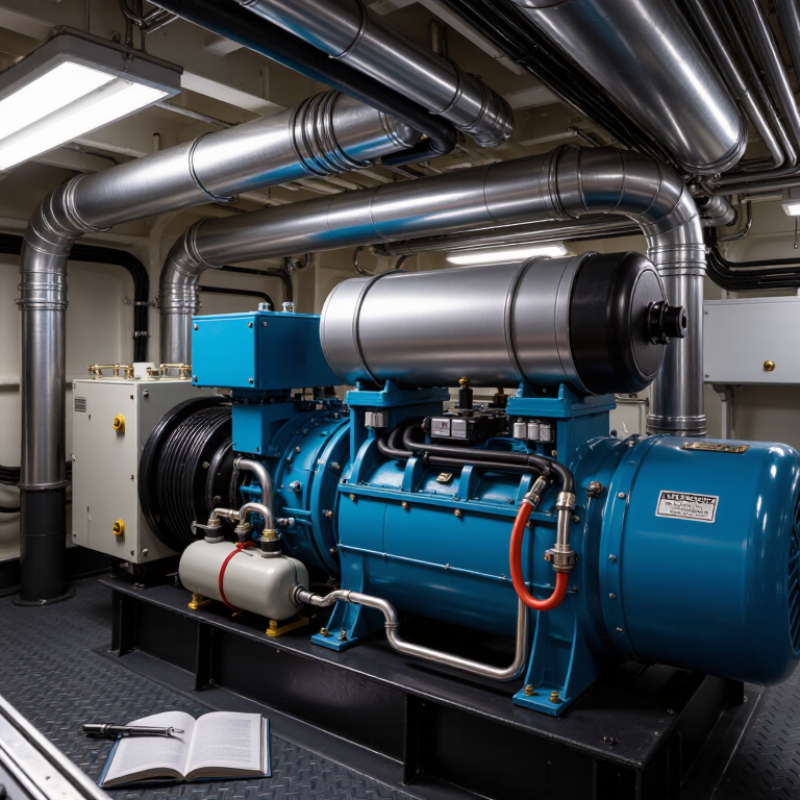
Marine generator sets convert diesel engine power into electricity for navigation, pumps, lighting, communications, and hotel services. They usually operate in a harsh engine-room environment, where salt air, vibration, heat, and changing loads test every component. Their role is not limited to producing power. They must also support safe operation when the main electrical source fails.
ISO 8528-1 defines several rating categories. Continuous Operating Power, or COP, supports a constant load for unlimited hours. Prime Running Power, or PRP, allows variable loads with defined limits and maintenance conditions. Limited-Time Running Power, or LTP, applies for a restricted operating period. Emergency Standby Power, or ESP, supplies backup power during an outage, but not continuous duty.
A rating label can mislead. The real choice depends on load profiles, running hours, cooling capacity, and required reserve.
ISO 8528 also uses performance classes from G1 to G4. G1 covers basic loads with modest voltage and frequency demands. G2 suits common commercial power needs. G3 requires tighter control for sensitive equipment, while G4 involves highly demanding electrical performance. Marine operators should compare these classes with vessel rules, emergency-load requirements, and generator testing procedures. In practice, engineers should record starting currents, step-load response, and fuel use under realistic sea conditions. Laboratory figures alone may not predict life at sea.
A marine generator set converts diesel fuel into dependable electrical power at sea. Its diesel engine produces mechanical rotation, while the alternator changes that rotation into electricity. The engine’s cylinders, fuel system, lubrication circuit, and cooling system must work together under changing loads. In practical operation, a seawater heat exchanger helps remove heat without sending corrosive seawater through sensitive engine passages. Small details matter. A blocked fuel filter can cause unstable output or an unexpected shutdown.
The governor controls engine speed as electrical demand rises or falls. Stable speed helps maintain the correct AC frequency. If several pumps start together, the governor must respond quickly without causing excessive smoke or a sharp frequency drop. The alternator then supplies power for lighting, navigation equipment, pumps, and other onboard loads. A separate 24 V DC system usually powers engine starting, monitoring, alarms, and control circuits. Its batteries need clean terminals, secure cables, and correct charging voltage. The simple explanation is useful, but incomplete. Governor response, battery condition, and cooling performance can vary with vessel design and maintenance history.
Tips: Record voltage, frequency, oil pressure, coolant temperature, and starting time during routine checks. Inspect battery connections for corrosion. Test the generator under a realistic load, not only at idle. Keep maintenance records specific. A vague note like “checked” may hide a developing fault. If readings drift slowly, investigate early; waiting for a complete failure is expensive and avoidable.
What Are Marine Generator Sets and How Do They Work?
A marine generator set combines a diesel engine, alternator, control system, cooling circuit, and exhaust equipment. Think of it as a compact power station at sea. Fuel enters the engine and mixes with compressed air inside each cylinder. Ignition creates expanding gases, which push pistons downward. Connecting rods transfer this force to the crankshaft. The crankshaft then delivers mechanical rotation to the alternator.
The alternator changes rotation into electricity through electromagnetic induction. A rotating magnetic field passes through copper windings and produces alternating current. The control system regulates voltage as onboard loads change. Frequency depends on engine speed and the alternator’s pole count. A four-pole machine turning at 1,500 rpm produces 50 Hz. At 1,800 rpm, it produces 60 Hz. The governor adjusts fuel delivery to maintain speed during sudden load changes.
Small details matter. Salt air can accelerate corrosion around terminals, while restricted seawater flow can raise engine temperature quickly. Regular checks should include coolant level, exhaust condition, insulation resistance, vibration, and fuel quality. A loose connection may create heat before any alarm appears. The process sounds orderly, but real equipment is less tidy. Load changes, fouled filters, and imperfect maintenance can reduce stability. This explanation also simplifies the system; protection relays and synchronization controls require deeper technical review.
Representative energy balance for 100 units of diesel-fuel energy in a medium-speed marine diesel generator.
Fuel combustion releases thermal energy in the diesel engine. Approximately 40% is converted into crankshaft power, which drives the alternator and is converted into 50/60 Hz electricity. The remaining energy is mainly discharged through exhaust gases, engine cooling systems, and mechanical or electrical losses. Actual values vary with engine load, speed, cooling conditions, and generator efficiency.
Marine generator sets convert engine power into electricity for propulsion support, navigation, pumps, lighting, and hotel loads. A diesel or gas engine drives an alternator, while a controller regulates voltage and frequency. On many vessels, generators feed a main switchboard before power reaches distribution panels.
Typical 400 V three-phase marine systems use 400 volts between phases and about 230 volts between a phase and neutral. They commonly operate at 50 or 60 Hz, depending on vessel design and port requirements. A 250 kVA generator at 400 V can deliver approximately 361 amperes at unity power factor. Real loads draw less efficiently. Power factor, motor starting current, and cable length matter. IEC 60092-302 addresses electrical installations and generating sets for ships, including performance and testing expectations.
Protection relays disconnect short circuits, overloads, reverse power, and under-frequency conditions. Parallel generators share load through synchronization controls. One unit may carry hotel loads, while another starts when cranes, pumps, or compressors demand more power. The Fourth IMO GHG Study 2020 reported about 1,056 million tonnes of CO2 from international shipping in 2018, representing roughly 2.89% of global anthropogenic emissions. Efficient load sharing can reduce unnecessary fuel consumption, although the improvement depends on maintenance and operating profiles. A 400 V label can hide serious design differences. Harmonics from converters, poor grounding, and weak standby testing still create failures.
Not always elegantly.
Marine generator sets convert fuel energy into electrical power for lighting, pumps, navigation systems, and cargo equipment. A diesel engine turns an alternator, while control systems regulate voltage and frequency. In a working engine room, load changes are visible through fuel flow, exhaust temperature, and generator sound.
200–220 g/kWh
Fuel efficiency is often expressed as 200–220 g/kWh. This means the set consumes roughly 200–220 grams of fuel to produce one kilowatt-hour. The figure usually applies near an efficient operating load, not every condition. At low loads, incomplete combustion and heat losses can increase specific fuel consumption. A clean reading on a test sheet may not match an aging engine at sea.
MARPOL Annex VI controls important ship emissions, including sulfur oxides, nitrogen oxides, and particulate matter. Fuel sulfur limits can affect operating costs and exhaust treatment decisions.
Engine condition matters too. Correct injection timing, clean filters, stable cooling water, and regular maintenance support lower emissions. Measurement equipment should be calibrated and records should remain traceable.
Small details matter.
For example, a generator running far below its rated load may produce smoky exhaust and poor efficiency. Load sharing can reduce this problem, but it requires careful control. The 200–220 g/kWh range is a useful reference, not a promise. Real performance depends on fuel quality, ambient temperature, maintenance, and operating profile. I would also question any efficiency claim that ignores these conditions.
Quality Commercial LED Lighting specializing in LED Tubes, LED Bulbs, LED Troffers, LED Door Kits, LED Retrofit Kits, LED Panels, LED Spot Lights, LED Wall Packs, LED Lamps, LED Drivers, LED Accessories, LED Lights, LED Sales, and LED Manufacturing. Headquartered in Atlanta, Georgia, USA.