Choosing Led Spotlights is not just a matter of picking the brightest bulb. The right choice depends on where the light will go, what it needs to reveal, and how it should feel. A narrow beam can draw attention to a framed print, while a wider beam may suit a kitchen counter or hallway. Check the lumen output and beam angle together; a high lumen figure alone does not guarantee useful light. Small details matter.
Color temperature changes the room’s character. Warm white often feels comfortable in a living area, while cooler light can help keep work surfaces clear and bright. For accurate colors, compare the color rendering index, or CRI, and review the manufacturer’s technical data. Also confirm the spotlight’s base, dimmer compatibility, size, and heat-management requirements before buying. A fitting that looks right online may not suit an older fixture.
Outdoor and bathroom installations need extra care. Check the product’s IP rating against the location’s exposure to moisture, and follow the fixture maker’s guidance. Consider whether the light is replaceable, how easy it is to aim, and whether its warranty is clearly stated. No single spotlight fits every home. Even carefully chosen specifications can feel different once installed, so test the beam and color in the actual room when possible. This guide explores the practical questions that help you compare options with confidence—and recognize when a product’s claims need a closer look.
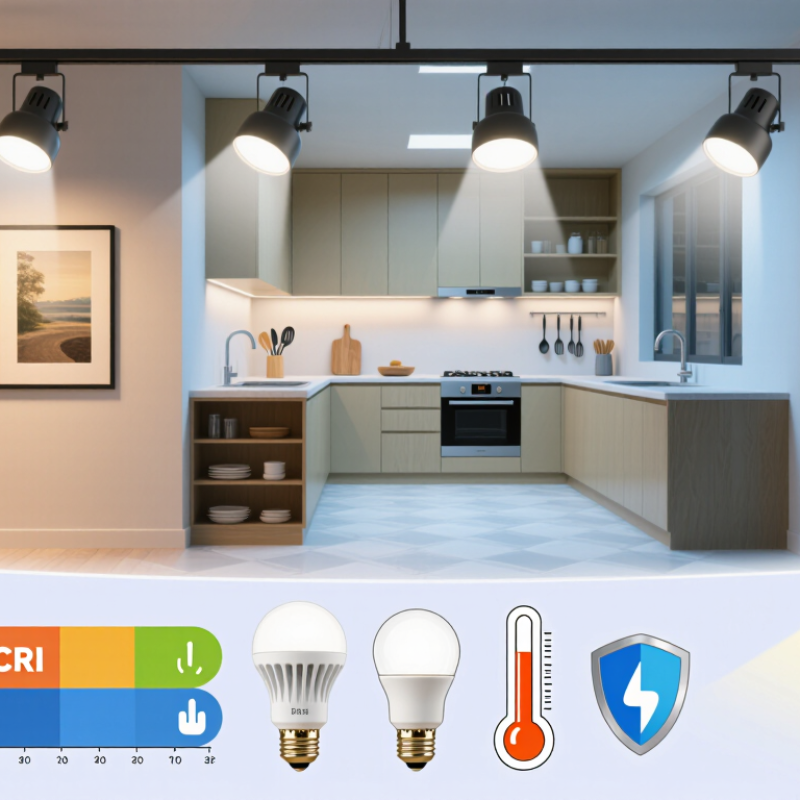
LED spotlights differ mainly in beam angle, installation style, brightness, and environmental protection. Narrow-beam models create concentrated light for artwork, shelves, or architectural details. Wider beams spread illumination across kitchen counters, retail displays, or living areas. Adjustable spotlights help direct light toward changing furniture or exhibition layouts.
Recessed spotlights sit neatly inside ceilings and suit modern rooms with limited visual clutter. Track-mounted versions offer flexibility, especially in galleries, shops, and home workspaces. Outdoor models need suitable IP protection against dust and moisture. Check the rating carefully before placing one near a doorway, garden path, or covered patio.
Brightness should match the task, not simply the room size. Lumens indicate light output, while color temperature affects the atmosphere. Warm white light feels comfortable in bedrooms, but neutral white often shows colors more accurately in kitchens or studios. A high color rendering index is useful for clothing, food, and artwork. I have found that beam angle is often overlooked. A very narrow beam can create harsh bright spots on pale walls. Test one fitting at night if possible. Real spaces can expose weaknesses that product descriptions miss.
How to Choose the Best LED Spotlights for Your Needs?
Identifying Brightness, Beam Angle, and Color Temperature Requirements
Start with brightness, measured in lumens, rather than watts. Watts describe energy use, not how much light reaches your work surface. A reading nook may need a focused, comfortable pool of light, while a kitchen counter benefits from brighter, even illumination. Compare the fixture’s lumen output with the size and purpose of the area. Dark walls and high ceilings can make a room feel dimmer. Real rooms are rarely perfect.
Beam angle determines how widely light spreads. A narrow beam highlights a painting or architectural detail, but can create sharp contrasts nearby. A wider beam suits general lighting over a table or hallway. Check the distance from the spotlight to its target: the farther away it is, the larger and less intense the lit area becomes. Color temperature, measured in kelvins, also changes the mood. Warm white often feels relaxed in living spaces; cooler white can make task areas appear clearer. Test samples if possible, since finishes and daylight affect how a color looks.
Tips: Match brightness to the task, then choose the beam angle. Consider warm or cool light in the actual room. Don’t rely on numbers alone. A setup that looks balanced on paper may still feel harsh at night.
Identifying brightness, beam angle, and color temperature requirements
Choose approximately 200–500 lumens for accent lighting, 500–1,000 lumens for task lighting, and 1,000 lumens or more for larger areas or outdoor security.
A narrow 15° beam creates focused accent lighting, while 24°–36° beams suit artwork and displays. A 60° beam provides broader area coverage.
Use 2700–3000K for warm, relaxing spaces, 3500–4000K for balanced work areas, and 5000K or higher for crisp outdoor or task-oriented lighting.
The chart shows the approximate illuminated diameter produced by different beam angles at a distance of 3 meters. Diameter is calculated using 2 × distance × tan(beam angle ÷ 2).
Choosing LED spotlights starts with the task, not the wattage printed on the box. A narrow beam can highlight artwork, while a wider beam spreads light across a kitchen counter. Compare lumens and lumens per watt. Higher efficiency means less electricity for similar brightness. In my experience, a 7-watt spotlight can replace an older 50-watt halogen lamp. However, results depend on beam angle and mounting height. Check verified test data, not optimistic wording.
Lifespan deserves careful reading. A rated 25,000 or 50,000 hours often assumes controlled conditions. Heat shortens LED performance, especially inside sealed fittings or shallow ceilings. Look for thermal information, operating temperature, safety certification, and a clear warranty. Professional installers also inspect ventilation and driver quality. I once chose a compact fitting for a warm display cabinet. It worked brightly, then dimmed earlier than expected. My selection focused too much on size. That mistake still matters.
Light quality changes how surfaces look. A high color rendering index helps food, wood, and skin appear more natural. Warm light around 2700–3000K often feels comfortable in living areas. Workshops may suit a cooler tone. Check flicker performance if people read, film, or work beneath the fixture. Dimming compatibility is easy to overlook. Ask whether the dimmer and driver are matched. Small details decide comfort.
How to Choose the Best LED Spotlights for Your Needs?
Installation conditions should guide your spotlight choice. Surface-mounted models suit concrete ceilings and shallow spaces. Recessed models look cleaner but need enough ceiling depth. Track-mounted options allow easier repositioning later. I once underestimated the space above a plasterboard ceiling, causing unnecessary cutting and repair. Measure the available depth, cable route, and ventilation area before buying.
Compatibility matters just as much. Check the spotlight’s voltage, wattage, dimming method, and connector type. Older transformers may flicker or overheat with modern LEDs. Confirm that the dimmer supports the lamp’s minimum load. In wet rooms or covered outdoor areas, examine the IP rating carefully. A higher rating offers stronger protection against moisture and dust, but it does not excuse poor sealing. Always follow the installation instructions and ask a qualified electrician about fixed wiring.
Tips: Test one fitting before ordering many. Check the cut-out diameter twice. Leave room for heat to escape. Compare the stated colour temperature with a real sample, because printed images can mislead. Look for clear safety testing and energy information. Environmental ratings need context; an IP44 light may suit splashes, while exposed rain usually requires stronger protection. My own choices are not always perfect, so I revisit the room’s humidity, cleaning habits, and seasonal temperature changes before final installation.
Use this guide to compare common LED spotlight options. Specifications vary by product, so confirm the lamp, fitting, driver, and local electrical requirements before purchase or installation.
| Spotlight Option | Typical Installation | Electrical Compatibility | Beam and Light Output | Dimming Considerations | Environmental Rating to Check | Suitable Uses |
|---|---|---|---|---|---|---|
| GU10 LED replacement lamp | Fits a compatible GU10 twist-lock lampholder, often in a recessed or surface-mounted fixture. Check the fixture’s cut-out, depth, and heat-clearance requirements. | Commonly designed for 220–240 V AC mains. Match the lamp’s rated voltage to the supply and fixture. | Common beam angles range from about 15° to 60°. Narrow beams create more focused accents; wider beams spread light over a larger area. | Only lamps marked dimmable should be used with a dimmer. Check the dimmer’s LED compatibility and minimum load. | For bathrooms or outdoor areas, check the IP rating of the complete fixture and its installed location, not just the replaceable lamp. | Downlights, kitchens, display areas, and general accent lighting where a GU10 fitting is already installed. |
| MR16 LED replacement lamp | Usually fits a compatible two-pin MR16 holder. Existing transformers may need to be checked or replaced. | Many MR16 lamps operate at 12 V AC or DC, but requirements differ. Confirm the lamp’s input type and the transformer’s output range and load rating. | Available in focused and wider beam patterns; compare beam angle and lumens for the intended distance and coverage. | Dimming depends on the lamp and the 12 V transformer or driver. Confirm that all components are explicitly compatible. | For wet or dusty locations, select a complete fixture with an appropriate IP rating for the exposure. | Replacing low-voltage spotlight lamps in existing compatible installations. |
| Integrated LED recessed spotlight | Requires a suitable ceiling opening, adequate installation depth, and access to the included or specified driver. Check insulation-contact instructions. | Typically connects to mains through a matched LED driver. Follow the product’s stated supply voltage and wiring instructions. | Often offered with fixed or adjustable beam angles. Compare lumens, beam angle, and colour temperature rather than wattage alone. | Use only a dimmable model with a compatible dimmer and driver. Some models are non-dimmable. | Choose the stated IP rating according to the location and applicable local bathroom or outdoor-zone requirements. | New installations, low-profile ceilings, and projects requiring a coordinated fixture and light source. |
| Adjustable or gimbal LED spotlight | Recessed or surface-mounted versions are available. Confirm that the tilt mechanism clears the ceiling cavity and does not obstruct nearby fittings. | Check whether the unit is mains-connected or requires a separate driver; use only the specified driver type. | The adjustable head can direct light toward artwork, shelves, or task areas. Beam angle determines how concentrated the light appears. | Verify dimming support for the exact fixture-and-driver combination. | Check the fixture’s IP rating, especially if it will be exposed to splashes, rain, or airborne dust. | Accent lighting, sloped ceilings, and locations where the light direction may need adjustment. |
| Outdoor LED spotlight | Usually surface-mounted on a wall, stake, or bracket. Use an installation method and cable suitable for the outdoor location. | Models may be mains-voltage or low-voltage. Match the supply, driver, and connection method to the product instructions. | Choose a narrow beam for highlighting a feature or a wider beam for broader coverage. Check lumens and mounting distance. | Outdoor dimming requires compatible rated controls and drivers; confirm suitability for the specific installation. | IP44 indicates protection against splashing water; IP65 indicates dust-tight protection and resistance to water jets. Select a rating appropriate to actual exposure. | Garden features, paths, façades, and other exterior areas when the fixture is rated for the conditions. |
| Enclosed or weather-exposed installation | Check whether the spotlight is approved for enclosed fittings, covered outdoor locations, or direct exposure. Provide required ventilation and clearances. | Confirm operating temperature limits and use the specified driver. Heat trapped in an unsuitable enclosure can shorten LED life. | Compare delivered lumens and beam angle after installation; ceilings, covers, and fixture optics can affect the result. | Verify the dimmer and driver remain within their operating limits in the installed environment. | IP ratings describe protection against solid objects and water under defined test conditions; they do not by themselves confirm suitability for every weather or installation condition. | Covered porches, enclosed fixtures, utility areas, or other locations with specific environmental demands. |
Before buying: verify fitting type, supply voltage, driver or transformer compatibility, fixture dimensions, dimmer support, colour temperature, lumen output, and the required IP rating. Have fixed mains wiring installed or checked by a qualified electrician in accordance with local regulations.
How to Choose the Best LED Spotlights for Your Needs?
Choosing Reliable LED Spotlights Within Your Budget
When I compare LED spotlights for real projects, I start with the job, not the sale price. A small reading area needs controlled brightness, while a driveway needs wider coverage and weather resistance. Check the lumen rating, beam angle, color temperature, and stated operating life. These figures matter more than dramatic packaging claims. I have learned this the hard way.
A reliable budget spotlight should have a solid heat sink, stable wiring, and clear safety documentation. For outdoor use, check the IP rating and inspect the cable seals before installation. Look for safety markings accepted in your region and, where available, independent testing information. A longer warranty may show manufacturer confidence, but read its exclusions carefully. Also compare energy use, replacement access, and mounting hardware costs. The cheapest unit may become expensive after repeated failures. Still, a high price does not guarantee better light.
Test one fixture at night if possible. Place it where shadows, glare, and nearby windows reveal its weaknesses. Warm white light often feels comfortable indoors, while neutral white can show work surfaces clearly. Avoid excessive brightness in a small room; reflected glare quickly becomes tiring. I sometimes overestimate the required output, especially in a bright showroom. A simple trial in the actual space can expose problems before several fixtures are purchased.
Quality Commercial LED Lighting specializing in LED Tubes, LED Bulbs, LED Troffers, LED Door Kits, LED Retrofit Kits, LED Panels, LED Spot Lights, LED Wall Packs, LED Lamps, LED Drivers, LED Accessories, LED Lights, LED Sales, and LED Manufacturing. Headquartered in Atlanta, Georgia, USA.