How to Choose LED Lights for Your Business?
Choosing Led Lights for a business is not just a matter of replacing old bulbs. The right system can make product colors clearer, reduce glare at workstations, and lower energy use. The wrong one can leave a shop floor harsh or a meeting room oddly dim. Lighting designer Howard Brandston is often quoted as saying, “Lighting is the only art form that is invisible.” His point matters in commercial spaces: people notice discomfort, even when they do not notice the fixtures.
Start with the work happening beneath each light. A café counter, warehouse aisle, and clothing display need different brightness and color quality. Check lumens for light output, not watts alone. Review color temperature and color rendering, too. A warm tone may suit a restaurant, while a neutral tone can help staff read labels. Details matter. A sample installed over a real counter can reveal color shifts that a catalog photo hides.
Then compare energy use, dimming options, expected lifespan, warranty terms, and maintenance access. Ask for product data and confirm that fixtures work with existing controls. A low purchase price can look attractive, but replacement labor may change the calculation. I would still pause before choosing based on savings estimates alone; actual operating hours and electricity rates vary. Good decisions begin with measurements, a small on-site trial, and input from a qualified lighting professional. There is no perfect fixture for every business, and that is worth admitting.
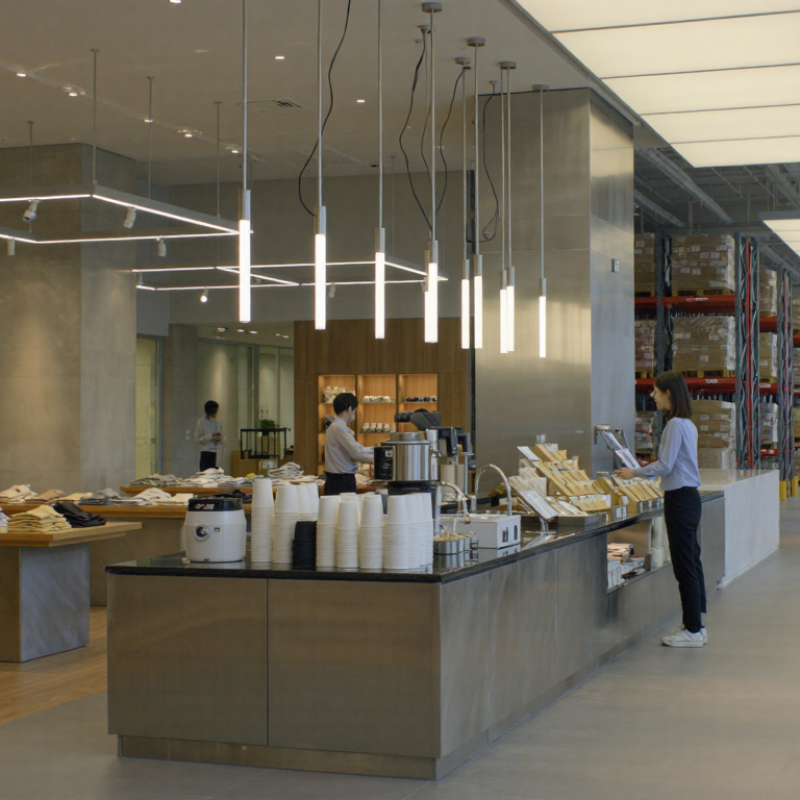
Identify the Lighting Needs of Your Business Space
How to Choose LED Lights for Your Business?
Identify the Lighting Needs of Your Business Space
Start by observing how people use each area throughout the day. A shop floor needs clear, even light so customers can read labels and compare products. At a reception desk, softer light can feel welcoming while keeping faces easy to see. Offices need comfortable task lighting that limits screen glare. Small details matter.
Note where daylight enters and how it changes. A bright window may leave nearby desks washed out in the morning, then dim by late afternoon. Walk through the space at different times, and look for shadows, reflections, and dark corners. If possible, measure light at desk height or on the work surface; a phone app can offer a rough check, not a formal reading.
Also consider ceiling height, wall color, and existing fixtures before choosing brightness or beam spread. High ceilings may need focused distribution, while low ceilings can make intense light uncomfortable. For display areas, accurate color rendering helps products look closer to their real appearance. Don’t assume one color temperature suits every room. Separate controls can let staff adjust zones, though too many settings may be ignored. I have seen plans overlook cleaning and maintenance access; that small omission can become inconvenient. Check applicable building requirements with a qualified lighting professional.
Assess Energy Use, Lifespan, and Total Cost
Choosing LED lighting for a business starts with the hours each fixture runs. A light above a checkout may operate for twelve hours daily, while a storage-room fixture runs only briefly. Compare options by light output, measured in lumens, rather than wattage alone. Then estimate annual energy use: watts divided by 1,000, multiplied by operating hours and your electricity rate. For example, a 100-watt fixture running ten hours daily uses about 365 kilowatt-hours per year. At 15 cents per kilowatt-hour, that is roughly $55. Small math. Across dozens of fixtures, the difference becomes meaningful.
Lifespan affects labor as well as replacement costs. Check the rated hours, but also review the test conditions and warranty terms. Heat, frequent switching, and enclosed fixtures can shorten real-world performance. That part is easy to overlook. A higher-priced light may cost less over time if it uses less power and requires fewer replacements, but include installation, compatible dimmers, and maintenance in the comparison. Estimate total cost over a realistic period, such as five years, and compare the same light output and operating schedule. The estimate will still be imperfect: energy rates may change, and actual use rarely matches a spreadsheet exactly. I would leave a little room for that uncertainty.
Check Controls, Compatibility, and Installation Requirements
For a business, LED selection is not just a question of brightness. Check whether the fixture, driver, and control system work together. Dimming protocols such as 0–10V, DALI, and phase-cut are not interchangeable. A mismatch can cause flicker, limited dimming, or lights that stay on. Small detail. Confirm the protocol in the product documents before ordering, then check it against the existing control system.
Controls should match how each space is used. A stockroom may need occupancy sensors; a meeting room may need dimming and manual adjustment. The U.S. Department of Energy’s 2017 report, Energy Savings Potential of Advanced Lighting Controls in Commercial Buildings, estimated average lighting-energy savings of about 29% from advanced controls. That figure is a modeled estimate, not a promise for every site. Room layout, operating hours, and commissioning all matter. Test it first.
Installation details deserve the same attention. Confirm voltage, wiring, ceiling height, fixture weight, environmental rating, and access for maintenance. Check whether emergency circuits or existing sensors need special handling. Ask the installer to verify compatibility on-site, especially in older buildings where drawings may be incomplete. I would not rely on a neat spreadsheet alone; it can miss a crowded junction box or an awkward sensor position. A small trial in one representative area can reveal problems before a full rollout.
How to Choose LED Lights for Your Business: Controls, Compatibility, and Installation
Compare lights by lumens—the amount of light they produce—not by watts, which measure energy use. These common incandescent-equivalent lumen benchmarks can help you estimate the output you need. Before purchasing, confirm that the LED is compatible with your dimmer or control system, supply voltage, and existing fixtures, and check any installation requirements.
Choose Products That Meet Quality and Safety Standards
For a business, an LED fixture must do more than produce bright light. Its electrical safety, heat control, and documented performance matter too. Check the product label and installation instructions, then confirm that the fixture carries a recognized third-party safety listing, such as UL or ETL, for your market. For luminaires, standards such as UL 1598 or IEC 60598-1 can help identify relevant safety requirements. A certification mark is useful only when it applies to the complete product and intended installation.
Performance claims also deserve scrutiny. The U.S. Department of Energy’s 2019 Energy Savings Forecast for Solid-State Lighting projected annual savings of 569 terawatt-hours by 2035 as LED adoption grows. That is a forecast, not a guarantee for any one building. Ask suppliers for test documentation on efficacy, color rendering, flicker, and rated life; compare results under consistent conditions. A cool-running fixture in a showroom may behave differently above a warm kitchen line or inside a dusty warehouse.
Fit the fixture to the actual space. Check the ingress protection rating near wash-down areas, and test glare at seated eye level before ordering in bulk. Lower price can be tempting. It is not proof of value. I would still verify dimmer compatibility and warranty terms in writing; those details are easy to overlook, and costly to fix after installation.