
A garment can look finished on a hanger, yet its label tells a deeper story. Garment Labels identify a brand, share size and fiber details, and offer care guidance. Some are woven into a side seam. Others are printed on soft satin, transferred onto fabric, or attached as a separate hangtag. The right choice depends on the garment, its fabric, and how the label feels against skin.
Fashion Revolution co-founder Orsola de Castro is widely associated with the line, “The most sustainable garment is the one already in your wardrobe.” That idea makes care information worth noticing. A clear wash temperature or drying instruction can help someone keep a favorite shirt wearable. A scratchy neck label, though, may be removed before its details are ever read. Small detail. Real consequence.
This guide explores common label types and what each is designed to do. Brand labels create recognition; size labels help shoppers find a fit; care and fiber-content labels provide practical information. Labels can also identify a collection or add a decorative finish. Materials, placement, print quality, and attachment all affect comfort and durability. There is no single best label for every item. A soft woven label may suit a jacket, while a smooth printed label may feel better in a lightweight top. And sometimes, a label that looks polished in a sample becomes irritating after a full day of wear. That is easy to overlook. The details deserve a closer look.
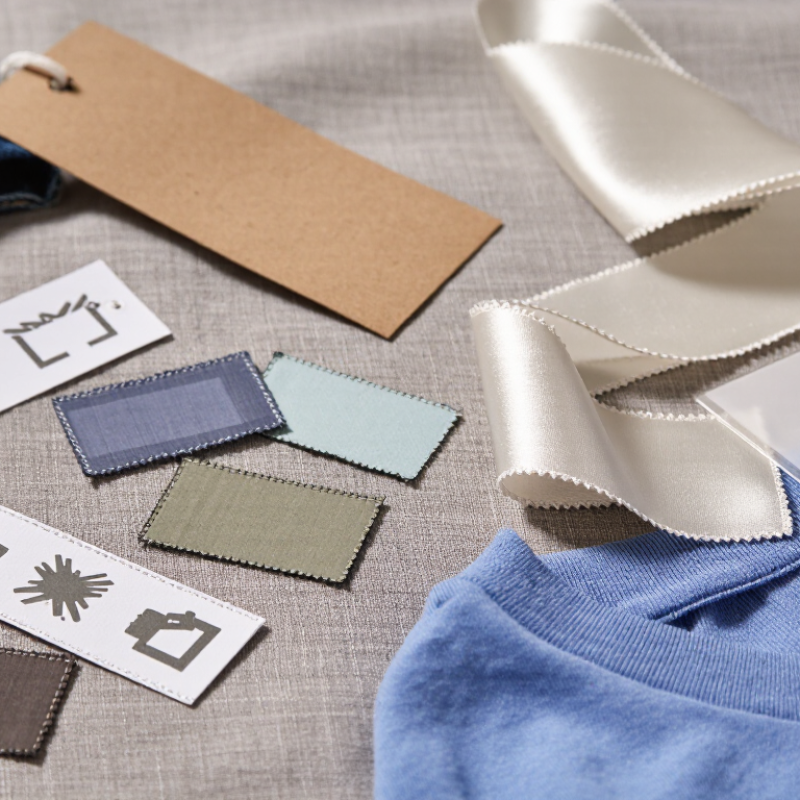
A garment label is a small information panel attached to clothing, often sewn into a side seam, neckline, or waistband. It helps shoppers identify what a garment is made from, how it may be washed, and which size to look for. Depending on the product, it may also show the maker’s details or where the garment was produced. The exact information varies by product and market, so labels should be checked against applicable requirements rather than copied from another item.
Labels can be woven, printed on fabric, or applied as a soft transfer. Each option has trade-offs. A woven label can stay legible after repeated wear, while a printed one can offer more room for detailed care instructions. A transfer avoids a sewn edge, though some wearers may still feel it against the skin. Small details matter: tiny type, scratchy corners, or symbols that are hard to interpret can make useful information frustrating. Keep wording clear and test the label on a finished garment. Care advice should reflect the fabric and construction, not just look neat on paper. Even a well-designed label can be overlooked when it sits in an awkward spot.
| What Are Garment Labels and What Types Are Available? - Garment Labels Defined: The Information Attached to Apparel | |||
|---|---|---|---|
| Label Type | Purpose | Typical Information | Common Location or Format |
| Care Label | Explains how to clean, dry, bleach, and finish a garment to help maintain it. | Instructions such as “Machine wash warm,” “Do not bleach,” or “Tumble dry low”; care symbols may also be used. | Often sewn into a side seam or attached near the neck. Instructions and symbol requirements vary by market. |
| Fiber Content Label | Identifies the textile fibers used in the garment. | Fiber names and percentages, such as “100% cotton” or “60% cotton, 40% polyester.” | Commonly printed or woven on a sewn-in label. Required wording and disclosure rules depend on the destination market. |
| Country-of-Origin Label | States the country where the garment was made or otherwise meets the applicable origin rules. | Origin wording such as “Made in [country].” | Usually attached to the garment or included on a product label. Origin requirements differ by jurisdiction. |
| Size Label | Communicates the garment’s intended size to help shoppers select a suitable fit. | A size designation such as “M,” “12,” or a measurement-based size; sizing systems vary across regions and garment categories. | May appear on a neck label, waistband label, hangtag, or printed product information. |
| Brand or Main Label | Identifies the garment line or maker to shoppers. | A brand name, logo, or other identifying design. This label is generally commercial rather than a substitute for required care or fiber information. | Often placed at the inside back neck, waistband, or another visible interior area. |
| Performance or Feature Label | Describes a textile or garment feature that may be relevant to wear or use. | Examples include “water-resistant,” “moisture-wicking,” or “stretch fabric.” Claims should be accurate and supported. | May be printed on a hangtag, package, or sewn-in label; exact placement depends on the product. |
| Safety or Warning Label | Communicates a safety instruction or hazard where one applies to the product. | A relevant warning or use instruction, such as a warning required for certain children’s sleepwear in some markets. | May appear on a sewn-in label, hangtag, packaging, or accompanying product information, depending on applicable rules. |
| Hangtag | Provides information at the point of sale and can be removed after purchase. | May show size, fiber details, care guidance, product features, or other sales information. | Typically attached temporarily with a fastener; it does not necessarily replace information required to remain with the garment. |
Garment labels are small, but the details they carry help shoppers understand what a product is made of and where it comes from. Under FTC 16 CFR Part 303, many textile products must disclose fiber content, country of origin, and the identity of the responsible business. These details should be readable and attached or displayed as required for the product. A label is not just decoration.
Fiber content is usually listed by generic fiber name and percentage by weight. For example, a shirt might state “60% cotton, 40% polyester.” Fibers present in small amounts may qualify for specific exceptions, so not every trace fiber must always appear. Country-of-origin information tells consumers where the product was made or processed under applicable labeling rules. The identity line may name the manufacturer or importer, or use an FTC-issued Registered Identification Number where permitted. Details matter. A number alone can feel less clear to shoppers, even when it meets the rule.
Before production, check that the label matches the garment and supporting records. A sample tag can look correct while a later fabric change makes its fiber percentages inaccurate. That happens more easily than expected. Part 303 includes exceptions and special requirements for certain products, so businesses should verify the rules for each item rather than rely on one template. Care instructions are governed separately and should not be confused with these three disclosures.
A garment label translates care advice into small, familiar symbols. ISO 3758:2023 groups these symbols into five categories: washing, bleaching, drying, ironing, and professional textile care. Five groups, one label. Each category uses a basic shape, such as a wash tub, triangle, square, iron, or circle.
Details inside or beside each shape change the instruction. Dots can indicate heat levels, while lines beneath a symbol can signal gentler treatment. A crossed symbol means the process should not be used. For example, a square with a circle may describe tumble drying, while a low-temperature iron symbol helps prevent scorching. Read the whole symbol, not just its outline.
These instructions help people choose suitable care at home or when seeking professional cleaning. Still, symbols cannot account for every stain, washing machine, or fabric condition. A delicate blouse may react differently after repeated wear. Check the full label before washing, and avoid guessing when a symbol is unclear. It is easy to overlook one small bar.
Garment labels identify size, care instructions, and material, but their placement and feel also shape how a garment is experienced. Woven labels use threads to create text or symbols, giving them a textured, durable finish. They suit necklines and side seams, though dense stitching can feel scratchy against sensitive skin. A softer edge helps, but results vary with the fabric and construction.
Printed labels place ink directly on fabric or on a separate label. They can show fine text clearly and often feel flatter than woven versions. Their appearance may fade with repeated washing, depending on the ink, fabric, and care routine. Heat-transfer labels are applied with heat and pressure, leaving no sewn edge. Smooth, but not flawless. On some fabrics, they may peel or crack if application conditions are unsuitable, so testing after washing is sensible.
Hangtags differ because they attach temporarily, often with a string or fastener. They offer room for product details, sizing, or a small illustration, and shoppers can remove them before wearing the garment. They do not replace sewn-in care information. A sample may look perfect on a table yet feel irritating once worn; checking labels on the finished garment, not just in isolation, is an easy step to overlook.
Qualitative comparison of common label characteristics (1 = lower, 5 = higher). Ratings are illustrative; actual performance depends on materials and manufacturing.
Woven labels are commonly chosen for durability, while printed and heat-transfer labels support detailed designs. Hangtags are temporary and are typically removed before wear.
What Are Garment Labels and What Types Are Available?
Choosing a Garment Label: Match Material, Placement, Durability, and Use
A garment label should suit the fabric and the way someone wears the item. Woven labels offer clear, lasting text, but their edges may feel rough against bare skin. Printed labels can feel smoother on soft T-shirts or children’s clothing. Heat-transfer labels remove a sewn-in edge, though they may wear differently depending on the fabric and care routine. Feel it first.
Placement matters just as much. A neck label should not rub when someone turns their head, while a side-seam label can keep sizing details away from the neckline. For jackets or workwear, a sturdier woven label may handle frequent wear well. Delicate knits often need a softer option and careful stitching. There is no universal best choice; a label that works on denim may feel uncomfortable on a lightweight blouse. Test a sample on the actual garment, then wash it as the finished item will be washed.
Tips: Check the label’s edges against skin, tug gently at its stitching, and inspect it after washing. Keep care instructions readable, and avoid placing thick labels where seams already press against the body. If the result feels almost right, reassess it before ordering a full run.
Quality Commercial LED Lighting specializing in LED Tubes, LED Bulbs, LED Troffers, LED Door Kits, LED Retrofit Kits, LED Panels, LED Spot Lights, LED Wall Packs, LED Lamps, LED Drivers, LED Accessories, LED Lights, LED Sales, and LED Manufacturing. Headquartered in Atlanta, Georgia, USA.