
China Top 10 Insulating FRP Profiles Manufacturers
China’s insulating materials industry has grown through pultrusion technology, disciplined production, and practical engineering experience. This article introduces China’s Top 10 Insulating FRP Profiles manufacturers for buyers comparing quality, capacity, and technical support.
Insulating FRP Profiles are used in switchgear, transformers, rail systems, cable supports, and industrial equipment. Their value depends on more than appearance. Resin selection, glass-fiber alignment, dimensional stability, surface finish, and dielectric performance all require careful evaluation. A reliable manufacturer should provide test reports, material specifications, production details, and clear quality-control procedures. Factory audits can reveal useful facts, including clean cutting areas, protected storage, calibrated testing equipment, and consistent labeling.
Evidence matters most.
This list considers manufacturers with relevant production experience, customization capability, and verifiable communication. It also reviews profile shapes, insulation grades, flame-retardant options, machining services, and international order support. Some suppliers may excel at complex sections, while others offer stronger volume production or shorter lead times. Buyers should still confirm current certifications and test results directly, because factory capabilities can change. Marketing language is not enough.
A perfect ranking is difficult.
The selection may also reflect an unavoidable limitation: public information does not always show reject rates, long-term field performance, or every subcontracting arrangement. Therefore, this guide should support due diligence rather than replace it. By comparing technical evidence with real project requirements, purchasers can identify a suitable Chinese partner for safe, stable, and economical FRP insulation solutions.
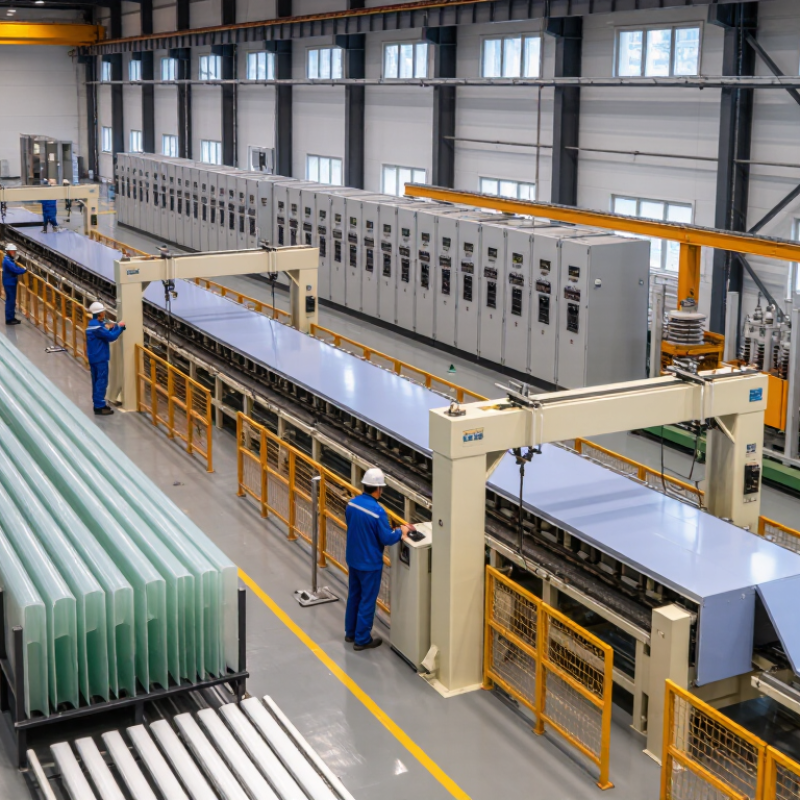
FRP Insulating Profiles: Definition, Composition, and Industry Applications
Insulating FRP profiles are structural components made from fiber-reinforced polymer composites. They combine electrical insulation with useful mechanical strength. Unlike metal, FRP does not readily conduct current or develop rust. This makes it practical for demanding electrical environments. In China’s insulating profile industry, manufacturers commonly produce rods, channels, angles, tubes, and customized sections. Their performance depends on design accuracy, resin quality, and controlled curing.
The composition usually includes glass fibers embedded in epoxy, polyester, or vinyl ester resin. Glass fibers provide tensile strength and dimensional stability. The resin binds the fibers and improves insulation, moisture resistance, and surface protection. Some formulations include flame-retardant or UV-resistant additives. Not magic. Poor fiber alignment, voids, or uneven curing can reduce reliability. Buyers should review dielectric strength, tracking resistance, water absorption, and temperature performance. Independent laboratory testing is more convincing than a polished datasheet.
FRP insulating profiles support switchgear, transformers, busbar systems, railway equipment, substations, and renewable-energy installations. They can hold energized components away from grounded frames while reducing weight during assembly. In humid workshops, their corrosion resistance may lower maintenance needs. Field experience still matters. A profile that performs well in a dry test may behave differently after repeated heating, vibration, and moisture exposure. Careful manufacturers therefore inspect surface finish, dimensions, resin distribution, and batch consistency before shipment. Structural calculations and application-specific testing remain necessary for unusual loads or high-voltage systems.
China Top 10 Insulating FRP Profiles Manufacturers - FRP Insulating Profiles: Definition, Composition, and Industry Applications
Technical overview of commonly manufactured FRP insulating profile categories, their composition, functional characteristics, and typical industrial applications.
| FRP Profile Category | Definition and Typical Geometry | Main Composition | Key Insulating Characteristics | Typical Applications | Common Manufacturing Process | Relevant Technical References |
|---|---|---|---|---|---|---|
| Pultruded FRP Rods | Continuous solid round or rectangular rods produced in fixed cross-sections for mechanical support and electrical separation. | Continuous glass fibers embedded in a thermosetting polyester, vinyl ester, or epoxy resin matrix. | High electrical insulation, good axial tensile strength, low moisture absorption, and stable dimensional performance. | Switchgear supports, busbar supports, transformer components, railway equipment, and electrical enclosures. | Pultrusion with controlled fiber alignment and resin impregnation. | ASTM D3917; ASTM D229 |
| FRP Angle Profiles | L-shaped structural sections used to form insulated frames, brackets, edge supports, and reinforcement assemblies. | E-glass roving or woven glass reinforcement combined with polyester, vinyl ester, or epoxy resin. | Electrical isolation combined with high bending stiffness, corrosion resistance, and low maintenance requirements. | Substation structures, cable-support systems, control cabinets, battery rooms, and corrosive industrial facilities. | Pultrusion; secondary cutting and drilling may be used for assembly. | ASTM D3917; IEC 60893 for applicable laminates |
| FRP Channel Profiles | U-shaped or C-shaped sections designed to provide lightweight structural support around cables, panels, and electrical components. | Glass-fiber reinforcement in a polyester, vinyl ester, or epoxy resin system; surface veil may be added for improved finish. | High strength-to-weight ratio, electrical non-conductivity, corrosion resistance, and good dielectric stability. | Cable trays, instrument supports, photovoltaic structures, chemical plants, and water-treatment installations. | Pultrusion with a continuous fiber architecture. | ASTM D3917; ASTM D149 for dielectric testing |
| FRP Flat Bars | Flat rectangular strips used as spacers, mounting rails, tie bars, and insulating structural members. | Unidirectional and multidirectional glass fibers in a thermosetting resin matrix. | Reliable insulation, high compressive and tensile strength, low thermal conductivity, and easy machinability. | Transformer assemblies, motor insulation supports, panel construction, and electrical maintenance platforms. | Pultrusion followed by precision cutting to specified lengths. | ASTM D3917; ASTM D149 |
| FRP Tubes | Hollow cylindrical profiles used as insulating sleeves, mechanical housings, and protective conduits. | Glass fiber reinforcement with epoxy, polyester, or vinyl ester resin; filament-wound versions may be used for pressure resistance. | Strong dielectric barrier, good mechanical strength, moisture resistance, and resistance to many chemicals. | High-voltage equipment, fuse carriers, instrument transformers, cable protection, and magnetic components. | Pultrusion, filament winding, or centrifugal molding depending on diameter and performance requirements. | ASTM D229; ASTM D149 |
| FRP Square and Rectangular Tubes | Hollow multi-sided structural profiles for enclosed supports and lightweight insulated frames. | Continuous glass roving, mats, or fabrics combined with polyester, vinyl ester, or epoxy resin. | Electrical isolation, torsional stiffness, low weight, corrosion resistance, and reduced thermal bridging. | Electrical cabinets, renewable-energy frames, rail-transit equipment, and industrial machine guarding. | Pultrusion using shaped dies and controlled resin curing. | ASTM D3917; ASTM D638 for tensile properties |
| FRP Ladder Profiles | Longitudinal rails or rung-support profiles used in insulated ladders and access equipment. | High-strength glass fibers in a flame-retardant polyester or epoxy resin system. | Electrical non-conductivity, high flexural strength, weather resistance, and suitability for energized-work environments when properly certified. | Utility maintenance ladders, substation access equipment, telecom installation, and industrial service areas. | Pultrusion with anti-slip surface treatment or molded inserts where required. | IEC 61478; applicable occupational safety requirements |
| FRP Insulator Mounting Profiles | Specially shaped support members used to position and mechanically secure electrical insulators and conductors. | High-glass-content pultruded profiles using epoxy, polyester, or vinyl ester resin. | High mechanical load capacity, stable insulation distance, low water absorption, and resistance to tracking when correctly formulated. | Switchgear, distribution equipment, busbar systems, substations, and traction-power installations. | Pultrusion followed by drilling, machining, or precision assembly operations. | IEC 60112; ASTM D149 |
| FRP Busbar Support Profiles | Insulating standoffs, rails, or brackets that maintain clearance and creepage distances around busbars. | Glass-fiber-reinforced epoxy or polyester resin, often designed for low moisture absorption and high dimensional stability. | High dielectric strength, arc-resistance requirements depending on design, mechanical rigidity, and heat-resistant performance. | Low-voltage and medium-voltage switchboards, motor-control centers, power distribution panels, and control systems. | Pultrusion, compression molding, or machining from laminated FRP stock. | IEC 61439; ASTM D149; IEC 60695 for applicable fire tests |
| FRP Custom Insulating Profiles | Engineered H, T, Z, dovetail, or multi-cavity sections designed for a specific electrical or mechanical assembly. | Selected glass reinforcement architecture with polyester, vinyl ester, epoxy, or flame-retardant resin systems. | Performance can be tailored for dielectric strength, flame resistance, low smoke, thermal stability, mechanical loading, or chemical exposure. | Transformers, generators, rail vehicles, wind and solar equipment, battery systems, and specialized power electronics. | Custom pultrusion tooling, machining, drilling, bonding, or overmolding. | IEC 60893; ASTM D3917; application-specific qualification standards |