
What Are the Best Types of Exterior Doors in 2026?
Choosing Exterior Doors in 2026 is not about finding one universal winner. The right choice depends on your home, climate, budget, and daily routine. Fiberglass can resist moisture and temperature swings, while steel often offers strong security at a practical price. Solid wood adds natural warmth and can be repaired, but it needs regular care. Aluminum suits some modern designs, though insulation performance varies by model.
Small details matter. A tight weather seal and well-fitted threshold can help limit drafts. Low-E glazing may improve comfort, depending on the door system and your home’s exposure to sun. Even an excellent door can disappoint if it is poorly installed. A neat product chart can make the decision look simpler than it is; real homes have uneven frames, shaded porches, and weather that changes by region.
This guide compares common exterior door materials, explains their trade-offs, and highlights features worth checking before you buy. It also considers maintenance, energy performance, security hardware, and installation quality—not just appearance or advertised ratings. No material is best for every entrance. Use the comparisons to narrow your options, then confirm product specifications and installation details with a qualified local professional. The small print counts.
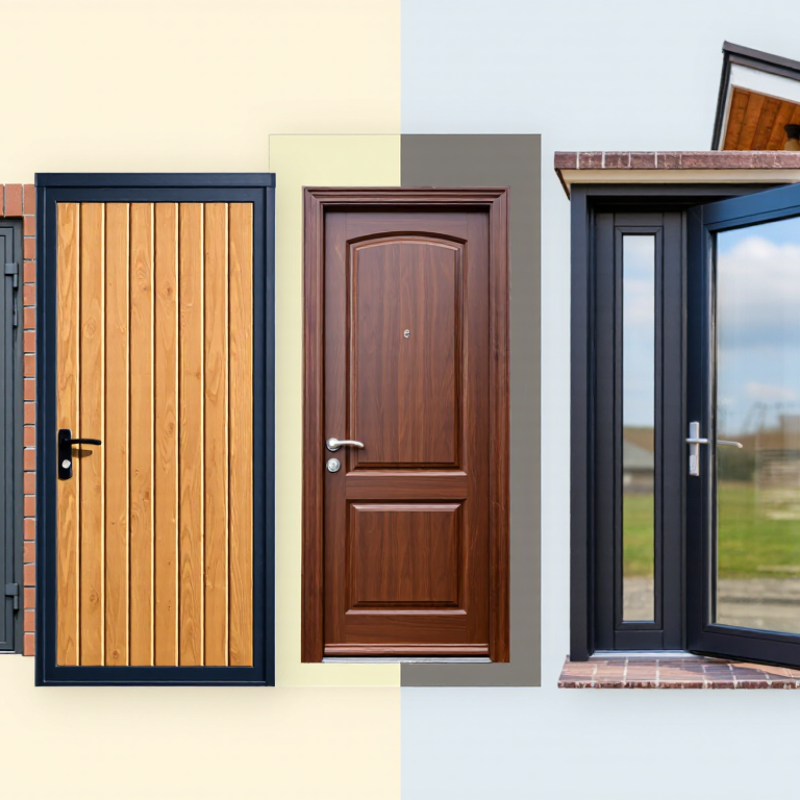
What Defines an Exterior Door and What Functions Does It Serve?
An exterior door is the complete assembly separating a home’s conditioned interior from the outdoors. It includes the door slab, frame, threshold, weatherstripping, and hardware. Its role is more than providing entry. It helps manage access, resist wind-driven rain, reduce drafts, and limit heat transfer. On a cold morning, a poorly fitted door can let air skim across the floor. A heavy slab alone will not seal a loose frame.
The door also supports privacy, security, and convenient movement between spaces. Its performance depends on the whole installation, not just the material. The National Fenestration Rating Council provides labels for comparing U-factor and solar heat gain. ENERGY STAR estimates that certified windows, doors, and skylights can reduce heating and cooling costs by up to 13% compared with non-certified products. That figure covers these products collectively, not exterior doors alone. Real results vary with climate, installation, and existing air leaks.
Tips: Check the threshold and weatherstripping for visible gaps, especially near the bottom corners. Compare rated products, then inspect the frame and installation details. Small misses matter. A door may look sound and still leak air.
| Door Type | What Defines It | Key Strengths | Considerations | Common Applications | Functions It Can Serve |
|---|---|---|---|---|---|
| Fiberglass | A molded or smooth-skin door, often built around an insulated core. | Generally resists moisture, does not rust, and can be finished to resemble wood grain. Insulated models can help limit heat transfer. | Appearance, insulation, and durability vary by construction and finish. Deep damage may be difficult to repair invisibly. | Main entrances, side doors, and locations exposed to changing weather. | Separates indoor and outdoor spaces, supports weather protection, and can provide privacy and access control. |
| Steel | A steel-skin door, commonly made with an insulated core and a protective coating. | Offers a sturdy surface and is often available as an insulated entry-door option. Smooth finishes can be relatively simple to maintain. | The finish can be scratched or dented, and exposed steel may rust if protective coatings are damaged. Performance depends on the full door-and-frame assembly. | Front, side, and service entrances where a durable, practical door is needed. | Provides a closing barrier, helps control access, and can reduce drafts when correctly fitted and weather-sealed. |
| Solid Wood | A door made primarily from solid timber, with construction varying by species and design. | Offers a natural appearance and can be cut, repaired, or refinished. A substantial door can provide a traditional entrance feel. | May expand or contract with changes in moisture and temperature. Requires suitable finishing and periodic maintenance to help protect it from weather. | Traditional or design-focused entrances, particularly where regular upkeep is acceptable. | Defines an entrance, provides privacy, and can contribute to the architectural character of a home. |
| Wood-Clad | A door combining a wood interior surface with a weather-resistant exterior cladding, depending on the product design. | Can provide a wood appearance indoors while the exterior cladding helps shield the wood from weather exposure. | Materials, joints, and finishes differ across designs. Inspect the exterior surface and maintain it according to its care requirements. | Main entrances where interior wood appearance and exterior weather protection are both priorities. | Creates a secure, weather-separating entrance while supporting interior and exterior design preferences. |
| Aluminum-Framed Glazed | A door with an aluminum frame and one or more glass panels. | Allows daylight into the home and can offer a slim-framed, contemporary appearance. Aluminum does not rot. | Thermal performance depends on frame design, glazing, and any thermal break. Glass choice affects privacy, heat gain, and safety. | Patio, garden, or other entrances where daylight and outdoor views are desired. | Provides passage and weather separation while admitting light; glazing can also preserve views or provide privacy, depending on its type. |
| uPVC | A door made with unplasticized polyvinyl chloride profiles, often incorporating insulated panels or glazing. | Does not rust or rot and typically needs no paint. Multi-chamber profiles and insulated panels are used in some designs. | Strength, finish options, and thermal performance depend on the profile, reinforcement, glazing, and installation. Damaged finishes may be hard to refinish. | Residential entrances and patio doors where low routine maintenance is preferred. | Closes off the building envelope, allows controlled entry, and may provide daylight when fitted with glazing. |
| Composite | A door made from a combination of materials, which may include a reinforced frame, insulating core, and exterior skins. | Can combine structural support, insulation, and weather-resistant surfaces in one assembly. | “Composite” covers different constructions, so material details and tested performance should be checked for each door. | Main entrances where a balance of appearance, insulation, and durability is sought. | Can provide an entrance barrier, weather protection, privacy, and access control; exact performance depends on its construction. |
An exterior door separates an indoor space from the outdoors or an unconditioned area. Its functions can include controlling entry, improving privacy, limiting drafts and moisture, supporting thermal comfort, and admitting daylight when glazed. Actual performance depends on the door, frame, hardware, weather seals, glazing, and quality of installation.