2026 Top Trends in Industrial Lighting for Enhanced Workspaces?
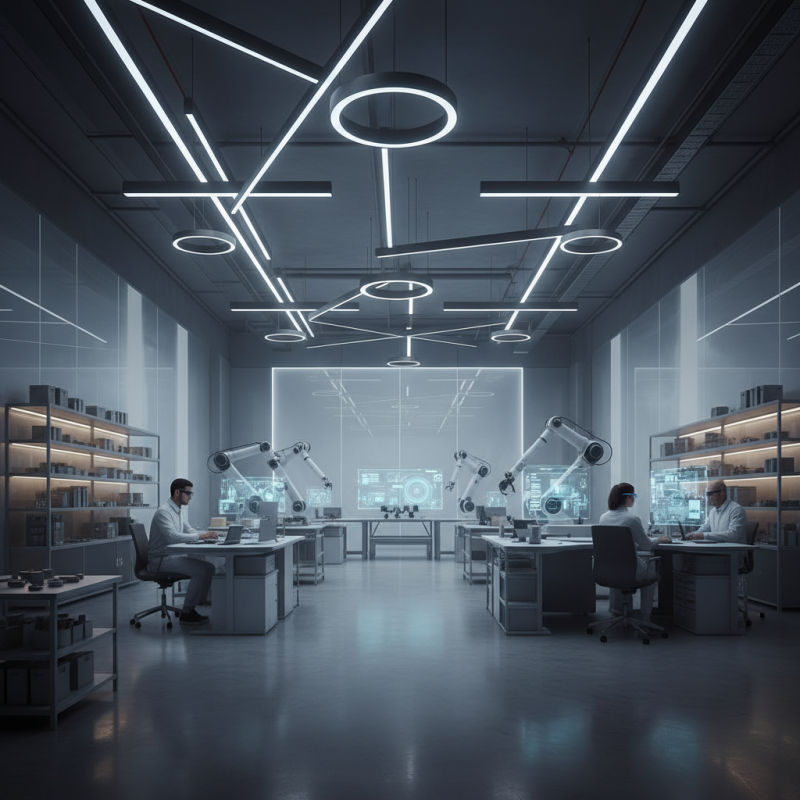
In the rapidly evolving world of industrial lighting, new trends are emerging to enhance workspaces. As businesses rethink their environments, the focus shifts to lighting that boosts productivity and safety. Modern industrial lighting integrates energy efficiency and advanced technology, creating an inviting atmosphere.
Innovations such as LED enhancements and smart controls are on the rise. These upgrades not only improve visibility but also minimize energy costs. However, companies must carefully evaluate their lighting strategies. Balancing aesthetics and functionality is crucial in creating effective workspaces.
Reflecting on past practices can reveal gaps in current approaches. The goal is to foster an environment where employees thrive. Ultimately, the right industrial lighting can significantly impact overall workflow and job satisfaction.
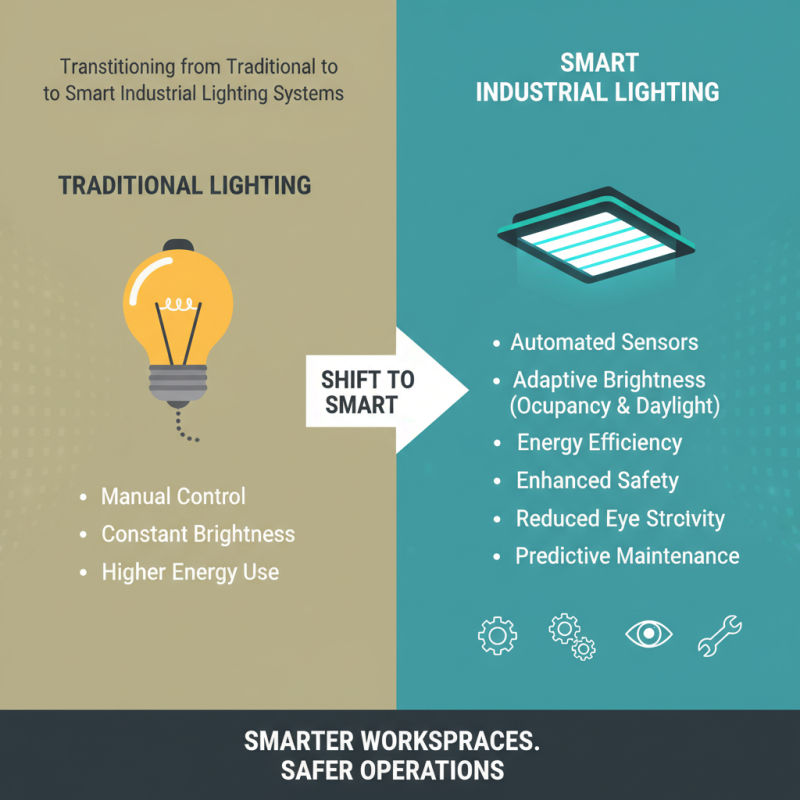
Transitioning from Traditional to Smart Industrial Lighting Systems
The shift from traditional to smart industrial lighting systems is transforming workspaces. Smart lighting improves efficiency and enhances safety. With advanced sensors, these systems adjust brightness based on occupancy and natural light levels. Workers benefit from reduced eye strain and increased productivity. Sensors can also detect maintenance issues before they become problems.
Integration of IoT technology offers real-time monitoring and control. This capability allows businesses to optimize energy usage, ultimately lowering costs. However, businesses need to ensure proper training for employees, as transitioning to smart systems can be challenging. Not all workplaces are ready for this transition. Some may face infrastructure limitations or resistance to change.
It is essential to evaluate the unique needs of each workspace. Customization plays a critical role in achieving the best results. Regular feedback from employees will highlight areas for improvement. Engaging workers in this transition can foster a more collaborative environment. The journey towards smart industrial lighting requires thoughtful consideration and open dialogue.
Integrating IoT Technology for Enhanced Lighting Control and Efficiency
The integration of IoT technology in industrial lighting significantly enhances workspace efficiency. Smart lighting systems allow for real-time data collection on usage patterns. This helps facility managers make informed decisions about lighting needs.
Optimizing lighting based on occupancy data can reduce energy waste. However, reliance on technology can lead to challenges. Connectivity issues may disrupt system functioning. Regular maintenance is crucial to avoid downtime.
Users may also struggle to adapt to new interfaces. Training employees on how to utilize these systems is necessary. Balancing innovation with usability ensures that the benefits are fully realized. Future trends will likely involve even more sophisticated IoT applications in workplace lighting.
2026 Top Trends in Industrial Lighting for Enhanced Workspaces
| Trend |
Description |
Benefits |
Implementation Challenges |
| Smart Lighting Systems |
Utilizing sensors and controls to adjust lighting based on occupancy and time of day. |
Increased energy efficiency, improved worker productivity, and reduced costs. |
High initial investment and need for ongoing maintenance. |
| IoT Integration |
Integration of Internet of Things technology to enable remote control and monitoring. |
Enhanced control over lighting, real-time data analysis, and quicker response times. |
Data security concerns and compatibility issues with existing systems. |
| Sustainable Lighting Solutions |
Use of renewable materials and energy-efficient designs to create eco-friendly lighting. |
Reduced carbon footprint and potential tax incentives for green practices. |
Higher cost for sustainable materials and potential performance limitations. |
| Human-Centric Lighting |
Lighting designed to enhance well-being by mimicking natural light patterns. |
Improved employee mood, reduced fatigue, and higher satisfaction levels. |
Requires careful tuning and advanced technology to implement effectively. |
| Active Monitoring |
Real-time analytics of lighting usage and environment conditions. |
Informed decision-making for energy savings and maintenance schedules. |
System complexity and training requirements for staff. |
The Importance of Human-Centric Lighting in Boosting Employee Productivity
Human-centric lighting is essential in today's workspaces. It focuses on the needs of employees. Proper lighting can increase productivity and enhance well-being. Studies show that light affects mood and energy levels. Employees working in well-lit areas often report higher job satisfaction.
To implement effective lighting, consider the color temperature. Warmer light tones can create a cozy atmosphere. Cooler tones, on the other hand, energize and focus the mind. Adjusting light levels throughout the day mimics natural light patterns. This approach helps maintain employees’ circadian rhythms.
Tips: Use dimmable LED lights. This feature allows easy adjustments for tasks. Also, encourage employees to personalize their lighting. This could involve desk lamps or movable shades. Such options can promote individual comfort.
Ultimately, reevaluate your current lighting setup. Are employees comfortable? Do they feel energized? Reflecting on these questions can lead to necessary changes. Enhanced lighting solutions can transform any workspace into a more productive environment.
Exploring Innovative Design Trends in Industrial Lighting Fixtures
Innovative design trends in industrial lighting fixtures are shaping modern workspaces in 2026. Emphasis is now placed on both functionality and aesthetics. Lighting has transitioned from simple utilitarian designs to more creative, customizable solutions. Factories, warehouses, and offices benefit from this evolution in significant ways.
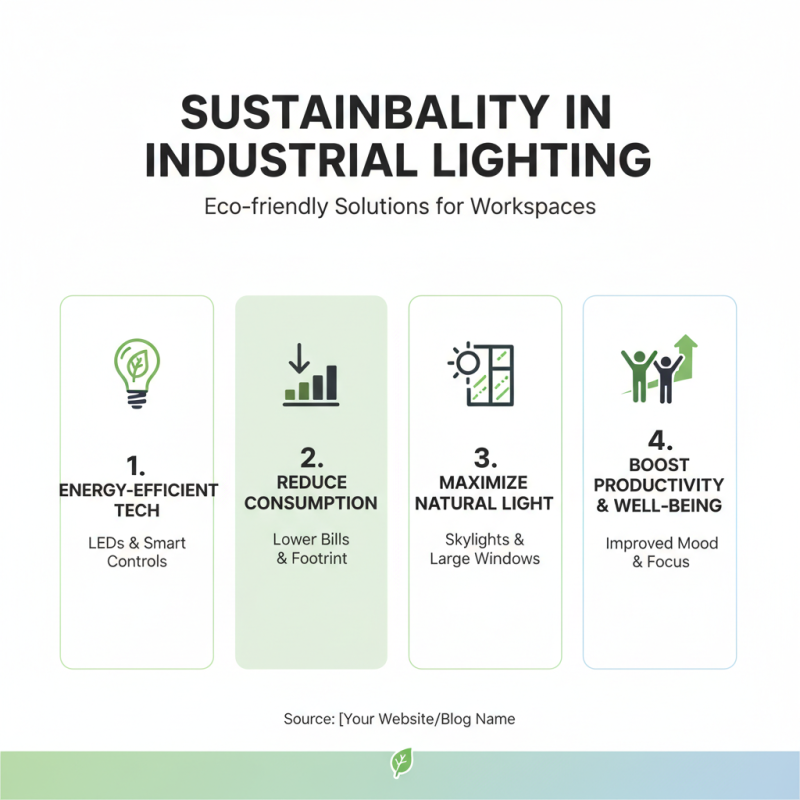
Key design trends include the use of sustainable materials. Eco-friendly fixtures not only enhance visual appeal but also reduce the carbon footprint. Natural light integration is another trend. Skylights and large windows improve mood and productivity. However, achieving the right balance between artificial and natural light can be challenging.
Tips for choosing lighting include understanding your workspace. Different areas require different lighting intensities. Task areas need brighter light, while relaxation zones benefit from softer illumination. Don't overlook the power of color temperature. Warm lights create a cozy atmosphere, while cool lights boost alertness. Experiment with dimmable options for flexibility.
Keep in mind that lighting should also minimize glare. Glare can lead to discomfort and reduced focus. Regular maintenance is essential to ensure optimal performance. The wrong choice can lead to dark corners or harsh brightness. Therefore, ongoing evaluation of lighting effectiveness is crucial for an enhanced workspace.